
10 Best Email Marketing Tools For Financial Service Businesses in 2026
Here are the 10 best email marketing tools for financial service businesses in 2026, with an honest look at what each does best and who it's really for.

Financial services businesses have a marketing problem most industries don't: the stakes are too high for generic tools.
A wealth manager, financial advisor, or insurance broker can't just "blast a newsletter." They need precision targeting, compliance audit trails, and the ability to build trust with clients over months (sometimes years) before a single meeting gets booked. The wrong email platform creates regulatory risk. The right one quietly powers client retention, referrals, and long-term growth.
This guide cuts through the noise.
Here are the 10 best email marketing tools for financial service businesses in 2026, with an honest look at what each does best and who it's really for.
Why Email Still Wins in Financial Services
Email remains, and rightfully so, the most popular route for financial advisors in this era of social media and short-form information. Financial decisions are rarely made on a whim.
Prospects take months to convert. Clients need steady reassurance to maintain loyalty, particularly when markets become choppy.
Broadridge Financial’s 2024 Marketing Trends Report found that 41% of advisors say newsletters are a top five channel to reach clients. Email is personal, direct and not subject to algorithm changes.
The rub is compliance. Each campaign has to consider SEC and FINRA regulations, careful language, approval chains, and record keeping. This doesn’t work well for all platforms.
What to look for in a financial services email tool:
- Compliance: Audit trails, approval workflows, archiving
- Segmentation: By asset class, risk profile, life stage, or client tier
- Automation: Triggered by life events, portfolio changes, or behavior
- CRM integration: Clean, real-time connection to your client data
- Deliverability: Consistent inbox placement — not spam folders
- Security: Encryption, SOC 2 compliance, data privacy controls
The Top 10 Tools
1. CampaignLark
Best for: Financial service businesses of all sizes wanting fast setup and reliable deliverability
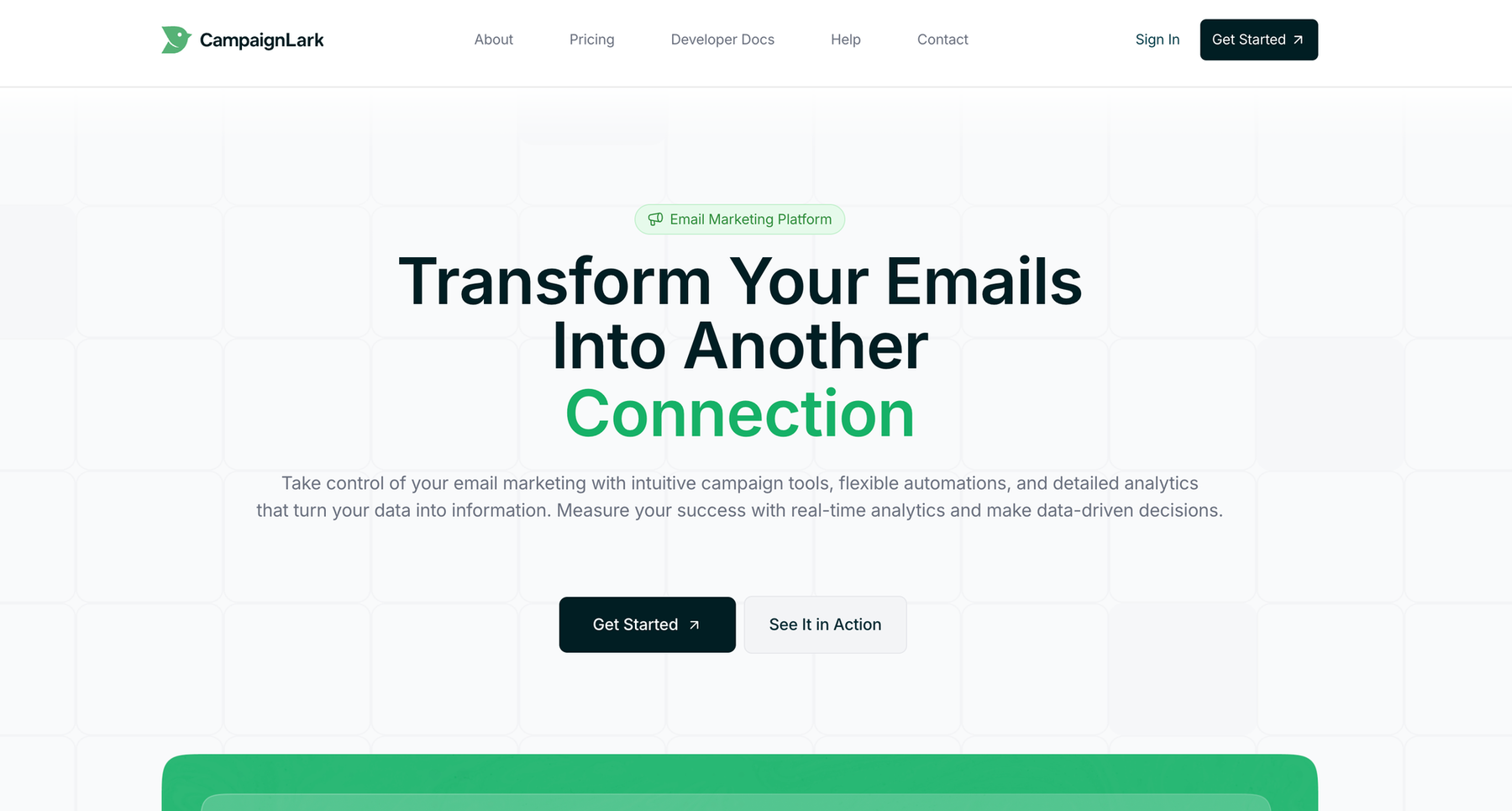
CampaignLark sits at the top of the list for making it simple for most financial firms. Setup takes less than five minutes. No developers needed. Use the drag-and-drop editor, choose from pre-built templates, or upload your own HTML.
But behind that simplicity lies some serious infrastructure.
Each month, CampaignLark sends over 100 million emails that achieve an inbox placement rate of over 85% . This is crucial, because losing a touchpoint during a volatile market week can cost you a client relationship.
Its behavioural trigger system lets you automate sequences based on sign-ups, clicks or inactivity, so your nurture campaigns respond to how prospects actually behave, rather than running on a fixed schedule.
The Isolated Workspaces feature is a standout for multi-advisor firms: separate sending environments, contact lists, and billing all managed under one account, keeping segments clean and reporting clear.
There are no hidden contact limits, and the infrastructure scales from hundreds of sends to millions without deliverability issues.
Pros: Fast setup, 85%+ inbox placement, behavioral triggers, isolated workspaces, unlimited contacts, real-time analytics.
Cons: Newer platform; CRM-specific compliance integrations may need additional configuration.
Pricing: Free to get started — see campaignlark.com for full plan details.
2. HubSpot
Best for: Mid-to-large financial firms needing email tightly integrated with their CRM
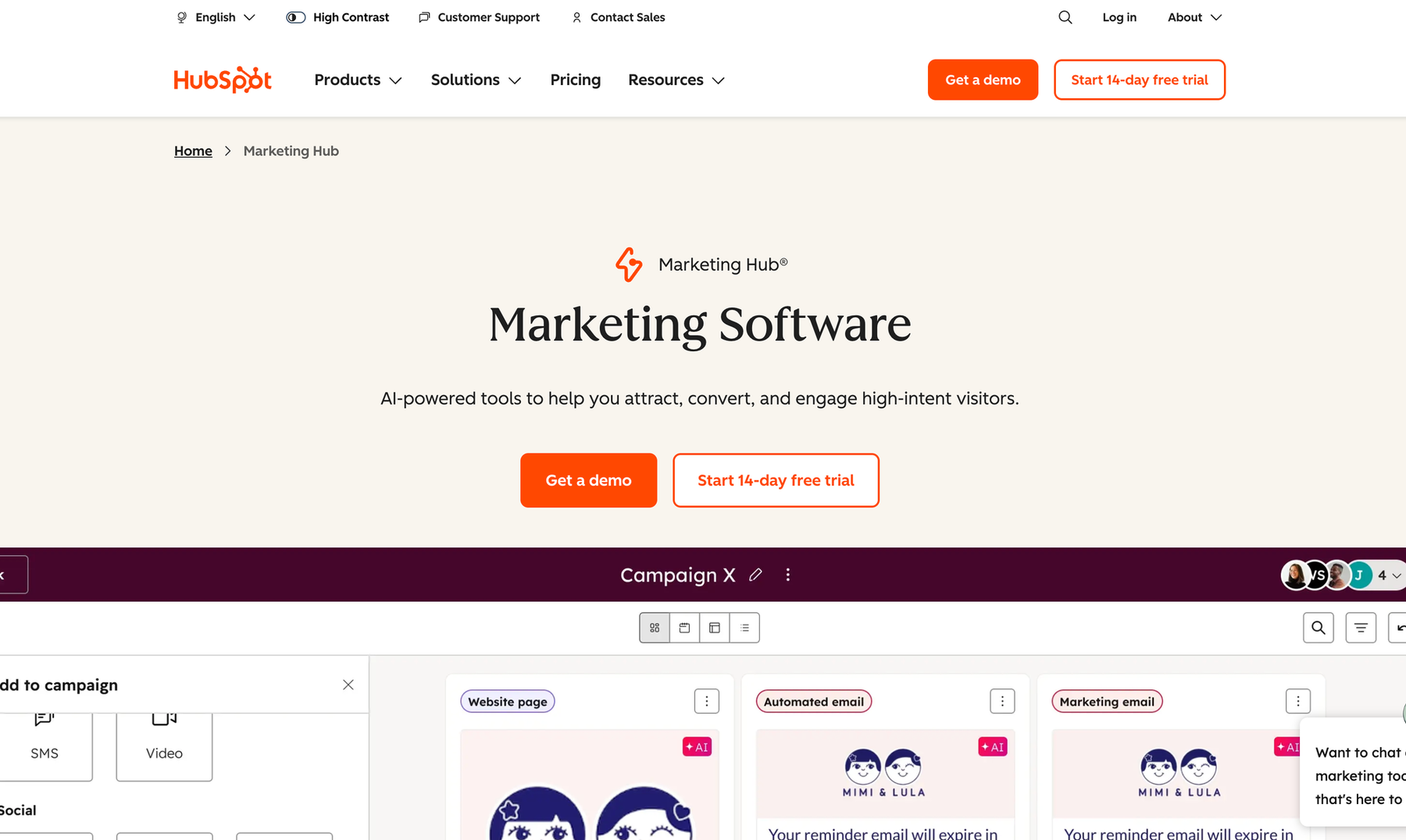
The core of HubSpot’s power is its “single source of truth” approach. When a sales rep updates a lead’s status in the CRM, email workflows update in real-time — no sync delays, no duplicate records, no manual data exports. And the integrity of that kind of data is important for a firm managing hundreds of high-value client relationships.
AI-driven segmentation automatically groups clients by portfolio size, risk appetite, and life stage, which is beneficial for financial advisors. Compliance workflows are built into the email creation process, capturing approval chains and keeping the audit trails the SEC and FINRA require.
It’s a premium product at a premium price, but the all-in-one value is hard to beat for larger firms.
Pros: Deep CRM integration, built-in compliance workflows, AI segmentation, strong analytics.
Cons: Expensive at scale; more than most solo advisors need.
Pricing: Free tier available; paid plans from ~$15/month.
3. ActiveCampaign
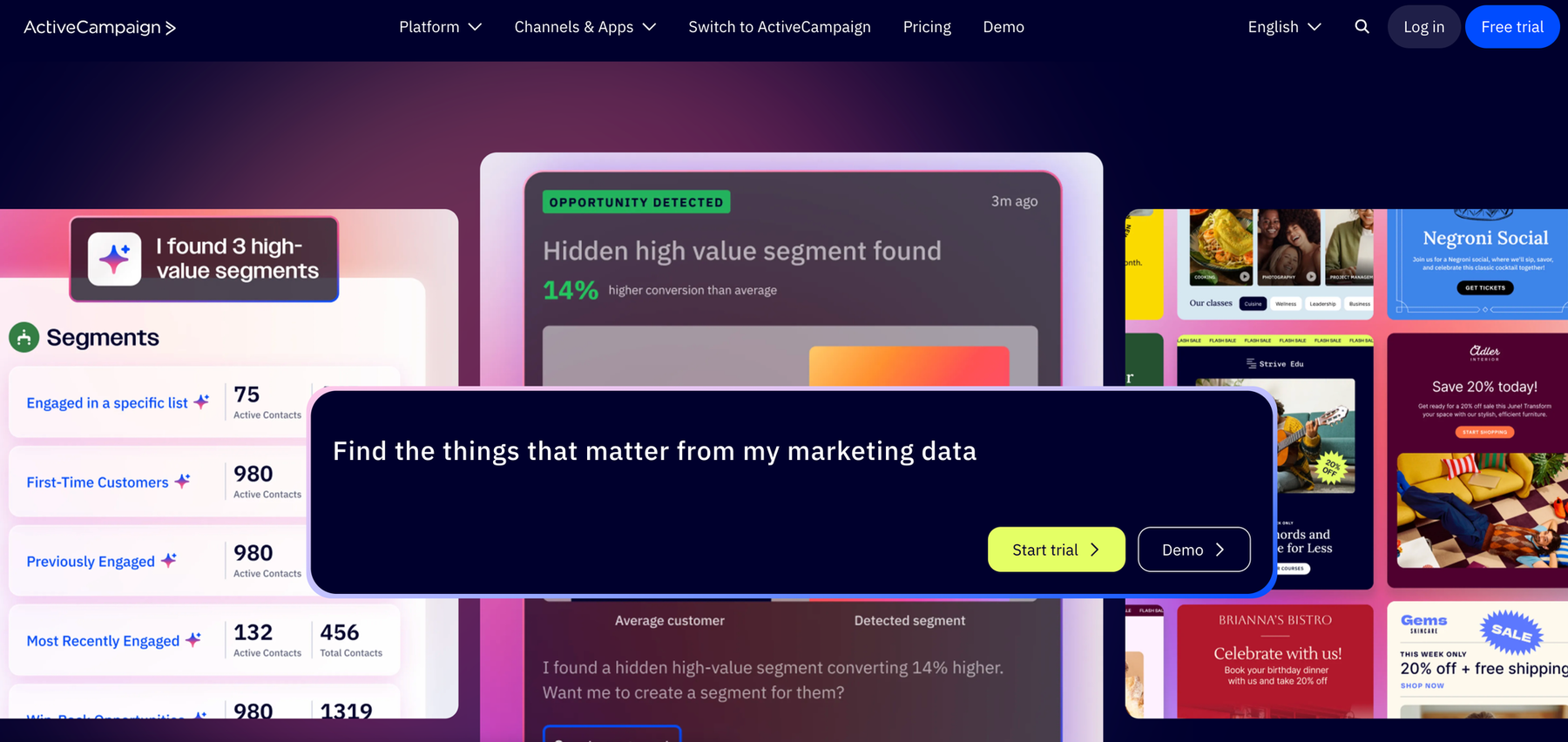
Best for: Firms that want email as part of a sophisticated, multi-touchpoint client journey
ActiveCampaign thinks about email differently — not as a broadcast tool, but as one node in a larger client experience. With over 900 pre-built automation templates, you can trigger messages based on website visits, document downloads, appointment completions, or prolonged inactivity.
Its 2026 "Predictive Content" feature uses AI to determine which email version a specific contact is most likely to engage with — a real advantage when your client base spans multiple life stages, risk profiles, and financial goals.
The learning curve is real, but the payoff is a nurture system that runs largely on its own once configured.
Pros: Best-in-class automation depth, behavioral triggers, AI-driven content optimization. Cons: Takes time to set up properly; compliance features need manual configuration. Pricing: From ~$15/month for 1,000 contacts.
4. Mailchimp
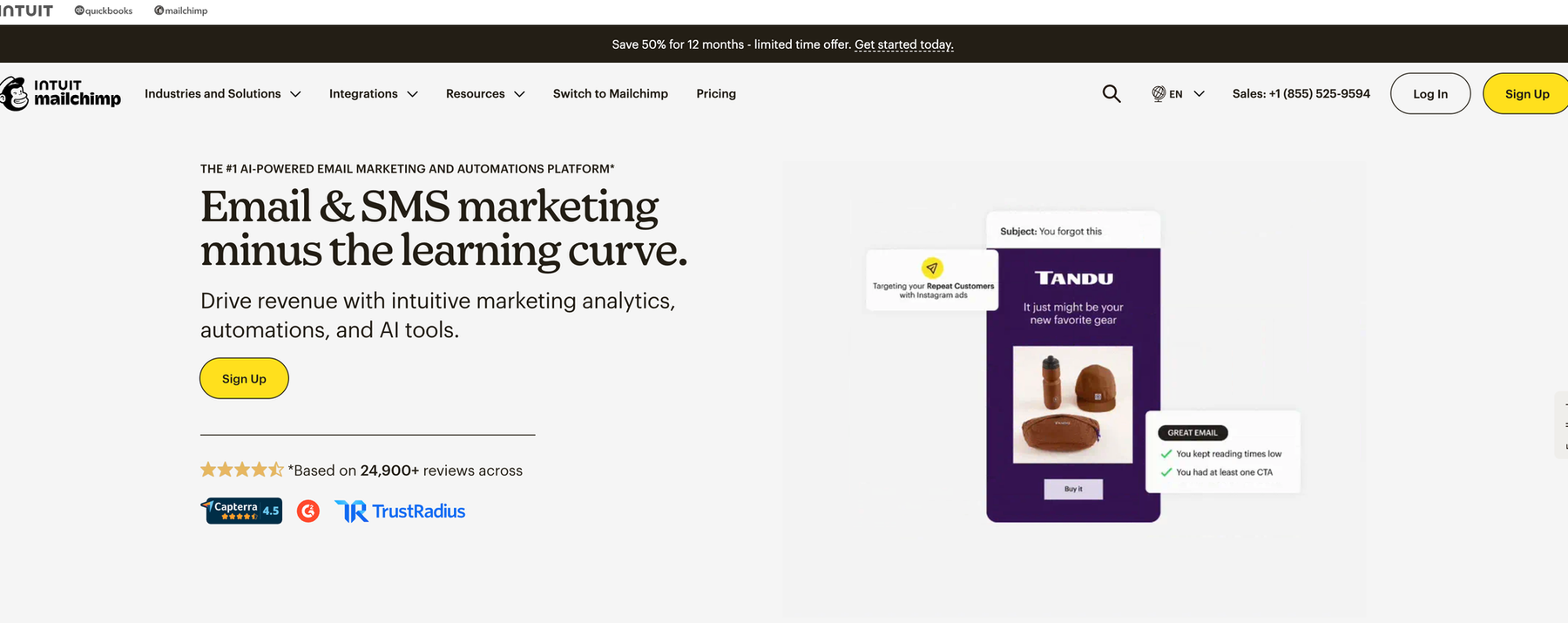
Best for: Solo practitioners and small advisory firms getting started with email marketing
Mailchimp is the easiest on-ramp to email marketing. Its interface is intuitive, its template library is extensive, and its integration ecosystem connects to virtually every scheduling, CRM, and landing page tool on the market.
It won't win on compliance depth or automation sophistication. But for a solo financial advisor sending a thoughtful monthly market update to a few hundred clients, Mailchimp delivers without demanding much in return.
Pros: Easy to use, vast integrations, strong templates, generous free tier.
Cons: Limited compliance features; automation is basic.
Pricing: Free up to 500 contacts; paid from ~$13/month.
5. Brevo
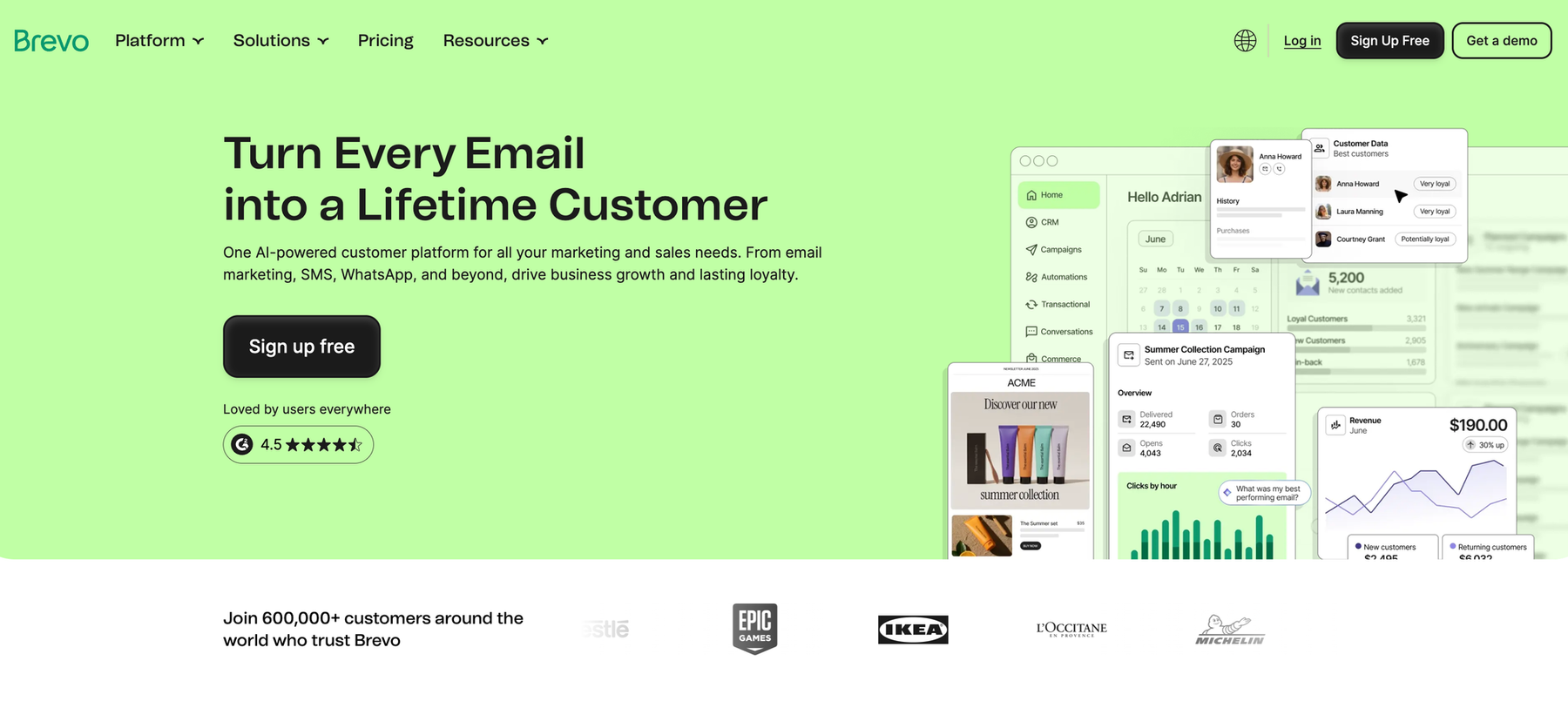
Best for: Larger financial firms sending high email volumes across multiple channels
Brevo prices by email volume rather than contact count — a model that works especially well for firms with large lists who communicate selectively rather than blasting everyone every week. For high-volume senders, this often translates to significant cost savings.
Its 2026 update added native WhatsApp and SMS integration, making it one of the few platforms that genuinely centralizes multi-channel campaigns under a single dashboard.
Pros: Volume-based pricing, multi-channel (email, SMS, WhatsApp), solid deliverability.
Cons: Fewer compliance-specific features; automation less powerful than ActiveCampaign.
Pricing: Free for 300 emails/day; paid from ~$25/month.
6. SmartAsset AMP
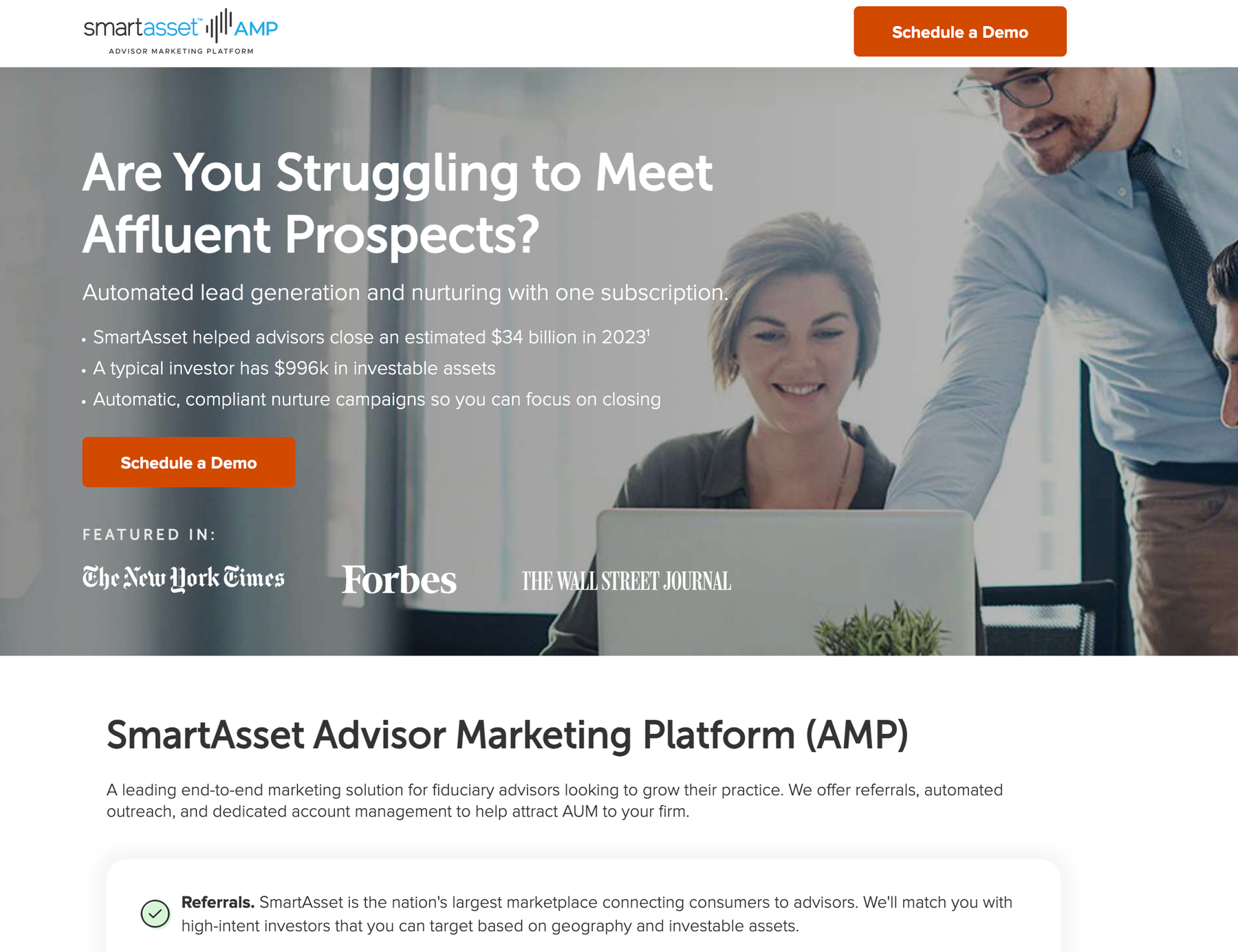
Best for: Advisors who want lead generation and email nurture in one platform
SmartAsset AMP is built differently from every other tool on this list: it doesn't just help you email the contacts you already have — it finds new ones. The platform matches advisors with qualified investor leads, then feeds them into automated nurture sequences to warm them up before conversion.
The add-on of automated text messaging and live phone connection via a SmartAsset representative makes this the closest thing to a fully integrated growth engine available to independent advisors.
Pros: Lead generation + email combined, purpose-built for financial advisors. Cons: Subscription pricing can be steep; less flexible than standalone email tools. Pricing: Subscription-based; varies by market.
7. Campaign Monitor
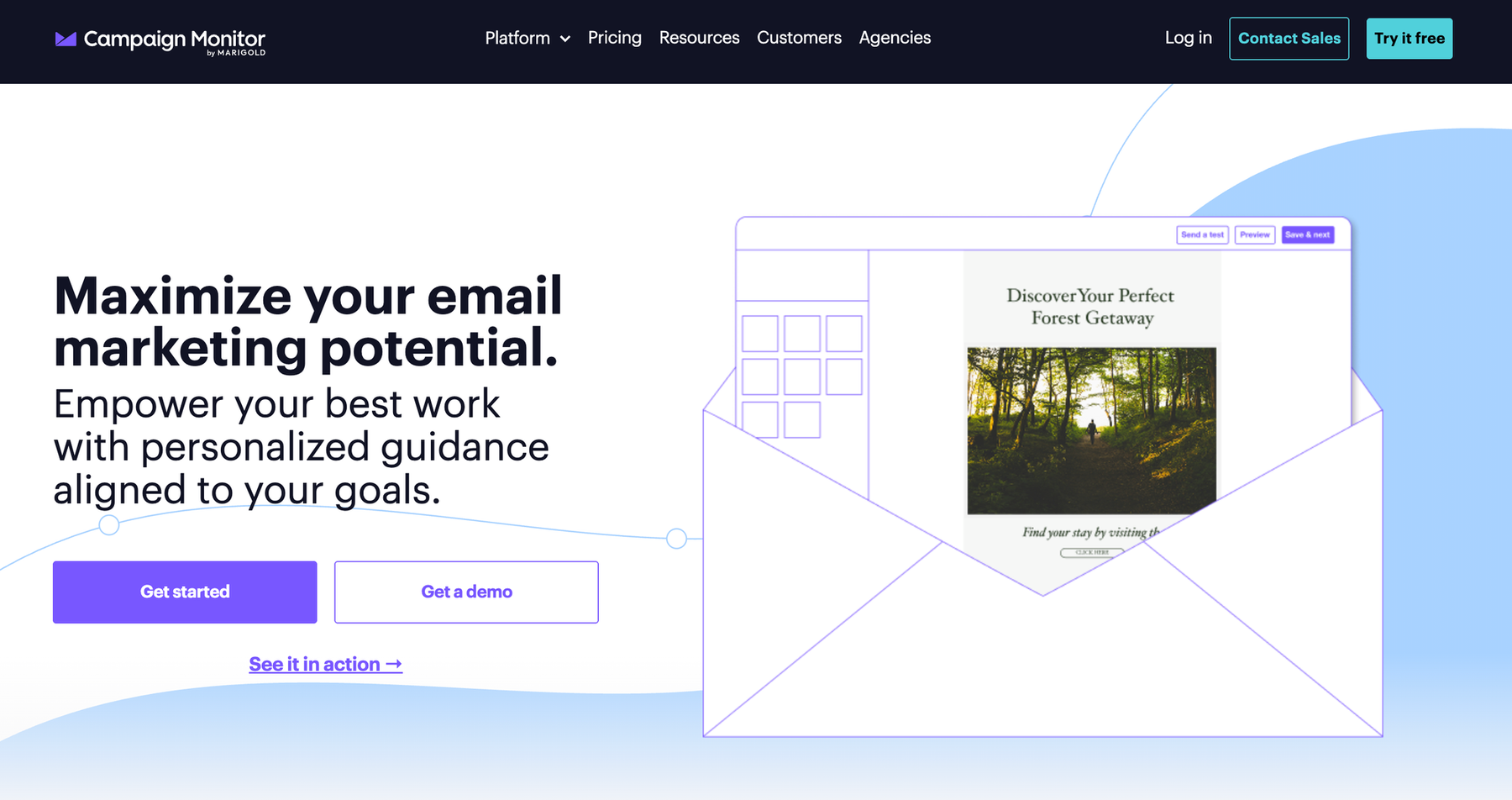
Best for: Australian financial firms wanting polished, professional email campaigns with strong analytics
Campaign Monitor was founded in Australia and has spent the last 20 years building a platform that understands what local businesses need. Used across financial services, professional services and government, its reputation for clean design output and reliable deliverability has made it a staple in Australian marketing stacks.
The power of the platform is being able to create really good-looking emails without a designer. Its drag-and-drop builder and robust template library enable financial advisors to develop branded newsletters and client communications that are professional-looking on any device. Advanced segmentation tools allow you to target by behaviour, engagement history, and custom fields – so a quarterly investment update doesn’t land in the inbox of a client you spoke to last week.
Campaign Monitor’s analytics suite is well known and offers open rates, click maps and subscriber growth data in an easy-to-present format for stakeholders or use in your own reporting.
Pros: Good analytics, trusted by Australian government and financial organisations, polished email design output, good segmentation, reliable Australian deliverability.
Cons: Less sophisticated automation than ActiveCampaign; pricing increases with list size.
Pricing: From ~$9 AUD/month; scales with subscriber count.
8. Constant Contact
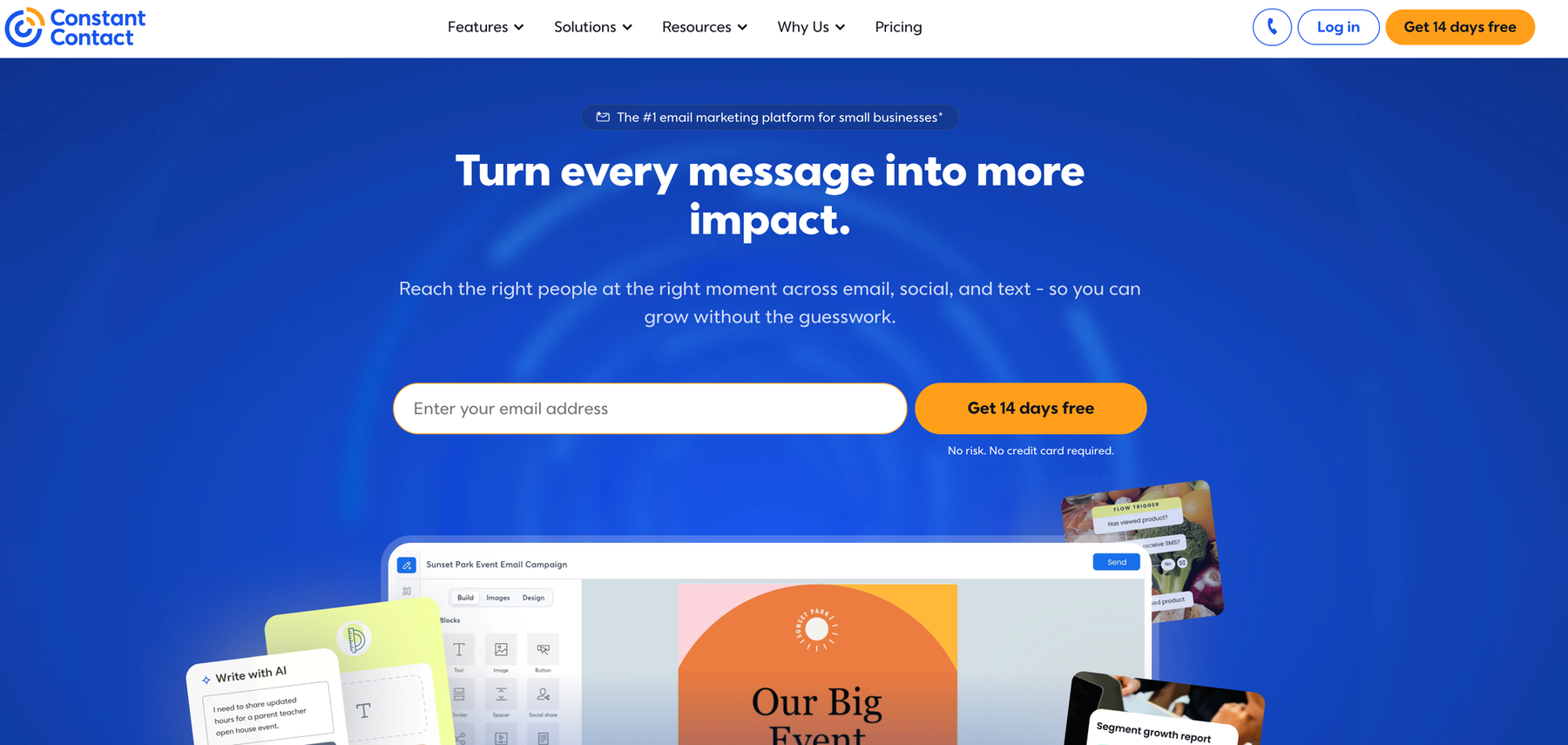
Best for: Financial firms that rely on events and seminars to generate business
If seminars, webinars or client appreciation events are central to your marketing strategy, Constant Contact’s event management features are the best in the business. You can easily set up registration confirmations, reminder sequences and post-event follow up.
But beyond the events, you get an AI writing assistant, 300+ integrations, and dynamic content blocks (that show or hide content based on a recipient’s job title, location, or custom fields), which give it the chops to be a capable all-rounder.
Pros: Excellent event tools, easy to use, AI writing assistant, good deliverability.
Cons: Automation depth is limited; compliance features need supplemental tools.
Pricing: From $12/month; 30-day free trial.
9. Sequenzy
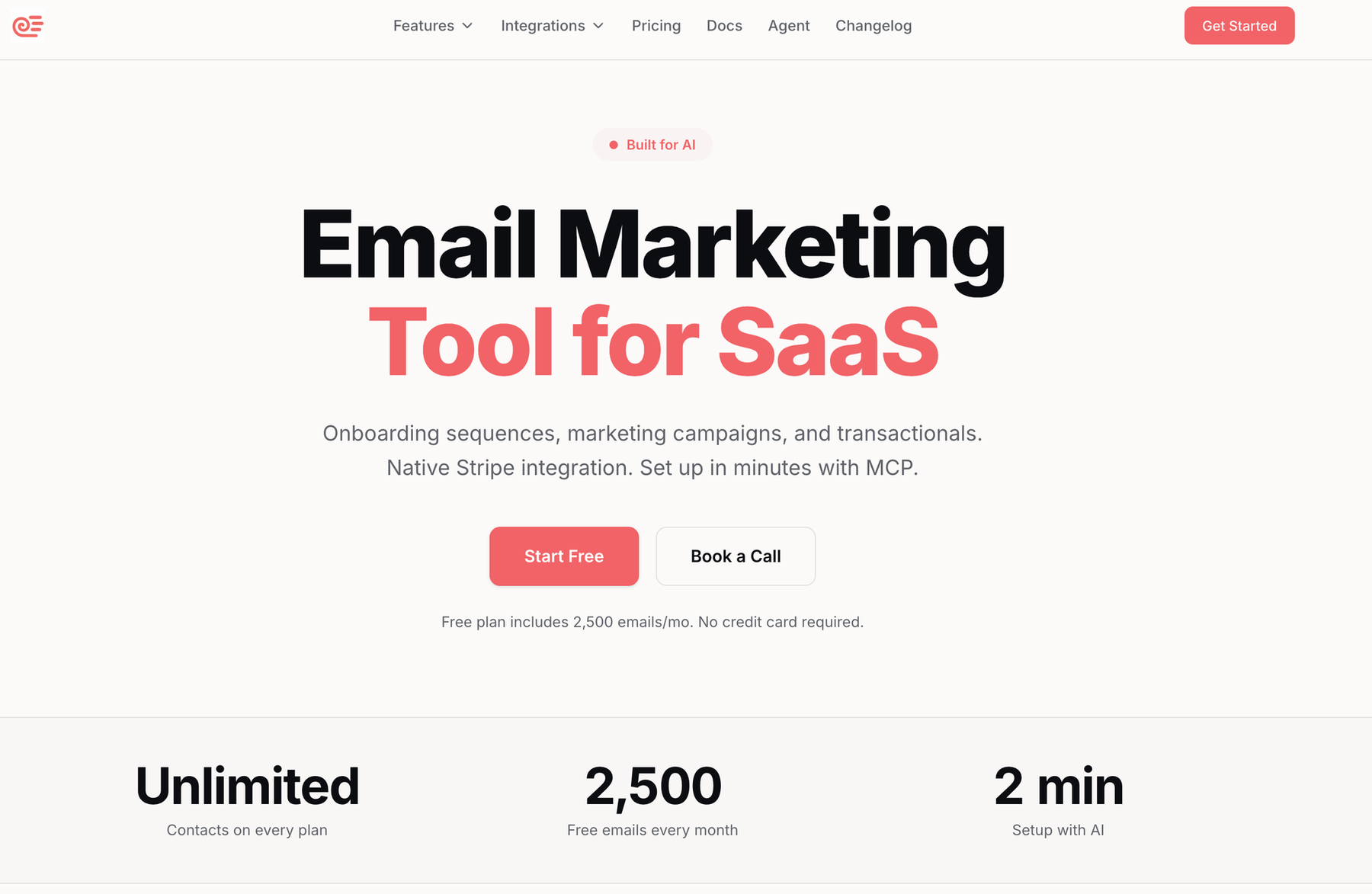
Best for: Advisors who want AI to generate their prospect nurture sequences for them
Sequenzy is designed for professional service businesses such as financial advisors, accountants, law firms. In essence it’s AI-powered sequence generation: describe your client profile, and the platform generates an entire multi-step nurture campaign in minutes, ready for review and deployment.
The platform also helps advisors with smart segmentation: start with client vs. prospect, then layer by life stage – accumulation, pre-retirement, retirement – or service tier.
Pros: Built for financial services, AI sequence generation, smart segmentation guidance.
Cons: Smaller integration library; newer platform.
Pricing: From ~$29/month; free trial available.
10. FMG Suite
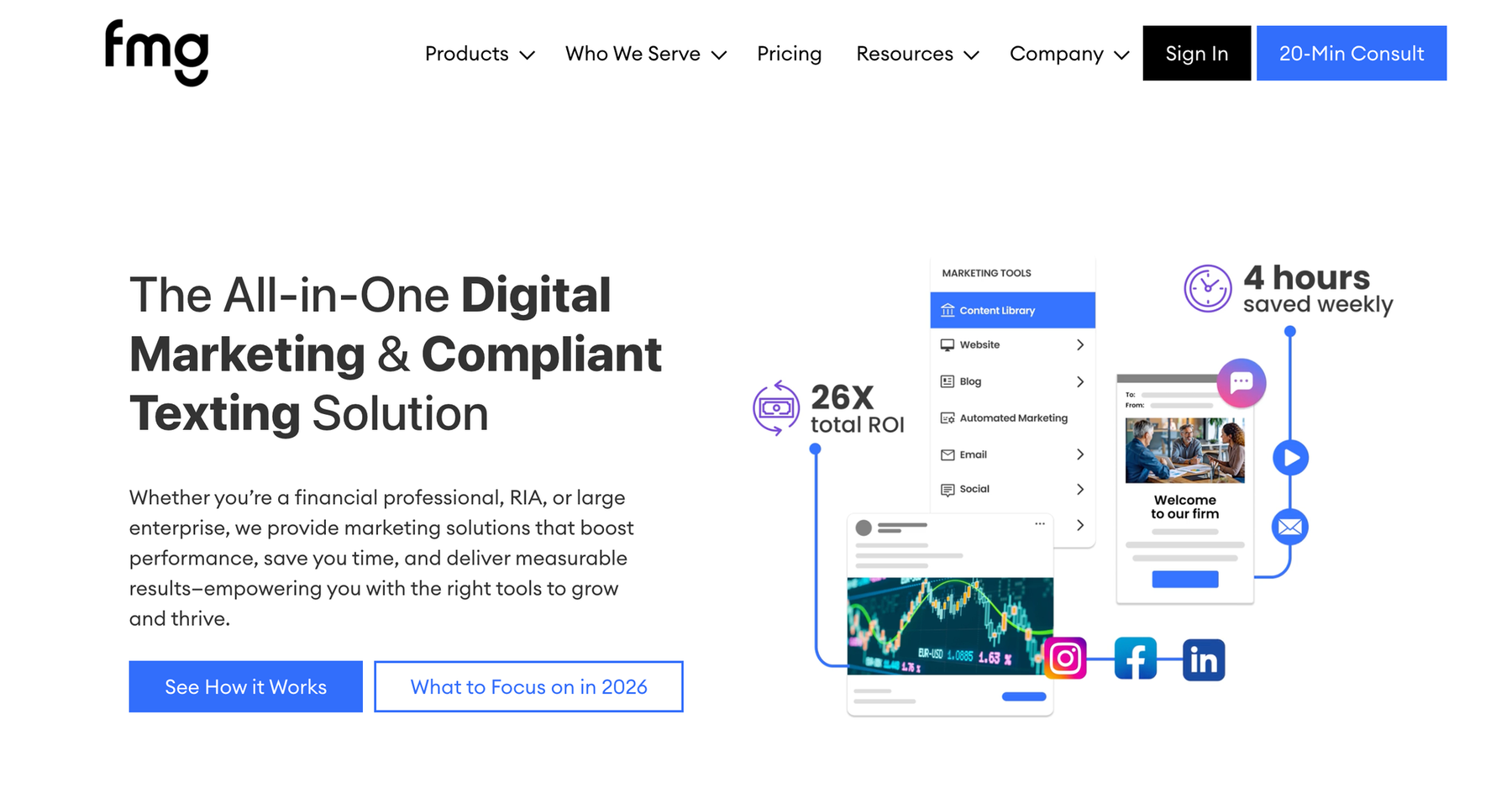
Best for: RIAs and financial professionals who need compliance managed for them
FMG Suite is one of the few platforms on this list built for financial professionals. The all-in-one system offers website hosting, email marketing, social media and compliant texting — all built around the regulatory needs of the financial services industry.
Its pre-approved content library drastically cuts time spent on manual compliance review and advisors say its newsletter tools are getting client responses and appointment requests that otherwise would need a personal touch.
Pros: Built for advisors and RIAs, compliance-managed content, full marketing suite.
Cons: Less flexible for non-standard use cases; premium pricing.
Pricing: Contact for pricing.
How to Choose the Right Tool
Start with practice size. Solo advisors and small firms are fine with CampaignLark, Mailchimp or Constant Contact. These are tools that are simple to set up and simple to maintain. The larger wealth management firms and growing RIAs need the depth of HubSpot or FMG Suite.
Let compliance requirements lead. If you are under stringent oversight from FINRA or the SEC, HubSpot, FMG Suite, and Sequenzy are the most comprehensive, built-in compliance features. CampaignLark’s isolated workspaces and real-time analytics also help ops that are compliance-conscious.
Be honest about content capacity. If you’re going to be doing original market commentary on a regular basis, use tools with AI writing help like Sequenzy, HubSpot, or Constant Contact. If you don’t want to write anything, OutboundEngine does it all for you.
Match the tool to your tech stack. In the HubSpot CRM? Keep the ecosystem. Zoho running across your company? The obvious choice is Zoho Campaigns. Seeking a fresh start and desire speed above all else? CampaignLark takes you from zero to first send in minutes.
Final Thoughts
For a financial services business, the best email marketing tool isn’t the one with the most features—it’s the one your team will actually use, consistently, over time.
Email works in this industry because trust is built slowly, over repeated contact. A monthly view of the market. October review reminder. A welcome sequence for a new prospect answering their questions before they ask them.
Choose a platform that’s right for your size, your compliance needs and your capacity to create content. Then send consistently. That's the whole plan.