
From Boring to Adorable: Heart-Warming Welcome Email Ideas That Make Customers Stay
Here's the thing: your welcome email is like meeting someone for the first time. You wouldn't walk up to a stranger, mumble your name, and immediately ask for money.
Someone just signed up for your email list. They gave you their email address, which is basically handing over a tiny piece of their digital life. And what do most businesses do with this moment? They send a bland, forgettable message that sounds like it was written by a robot having a bad day.
"Thanks for subscribing. Here's what we do. Buy something."
Yawn.
Here's the thing: your welcome email is like meeting someone for the first time. You wouldn't walk up to a stranger, mumble your name, and immediately ask for money. So why do businesses treat email subscribers that way?
Let's fix that. This article will show you how to turn your welcome emails from forgettable to unforgettable, from boring to absolutely adorable, the kind that makes people actually want to stick around.
Why Your Welcome Email Matters More Than You Think
Welcome emails get opened. A lot. We're talking about open rates hovering around 50% to 83%, depending on who you ask.
Compare that to regular marketing emails, which struggle to crack 20%. That's a massive difference.
Think about it: when someone signs up, they're curious. They're interested. They're actually paying attention. This is your window, and it's not going to stay open forever. Wait too long or send something boring, and that interest fades faster than ice cream on a hot sidewalk.
Here's what the numbers tell us: welcome emails generate four times more opens and five times more clicks than standard marketing emails. They also drive real revenue. Some studies show welcome emails have click-to-conversion rates above 50%. That's not just good—that's exceptional.
And get this: about three out of four people expect to receive a welcome email immediately after signing up. If you're not sending one, you're already disappointing people before the relationship even starts.
The Problem with Most Welcome Emails
Most welcome emails fail because they're written from the company's perspective, not the customer's. They're all about "us" and "our products" and "what we offer." But your new subscriber doesn't care about you yet. They care about themselves and what you can do for them.
The other big mistake? Being too corporate. Too stiff. Too... boring. People don't want to feel like they just signed up for a government newsletter. They want to feel like they joined something worth being part of.
Let's look at what actually works.
Heart-Warming Welcome Email Ideas That Actually Work
1. The Personal Note from the Founder
Nothing feels more genuine than a personal message from a real human being. Wildwonder, a gut-health drink company, does this brilliantly.
Their welcome email includes a note from founder Rosa, who shares her story and personally welcomes new customers. It's not some faceless corporate message. It's Rosa saying hello.
The magic here is connection.
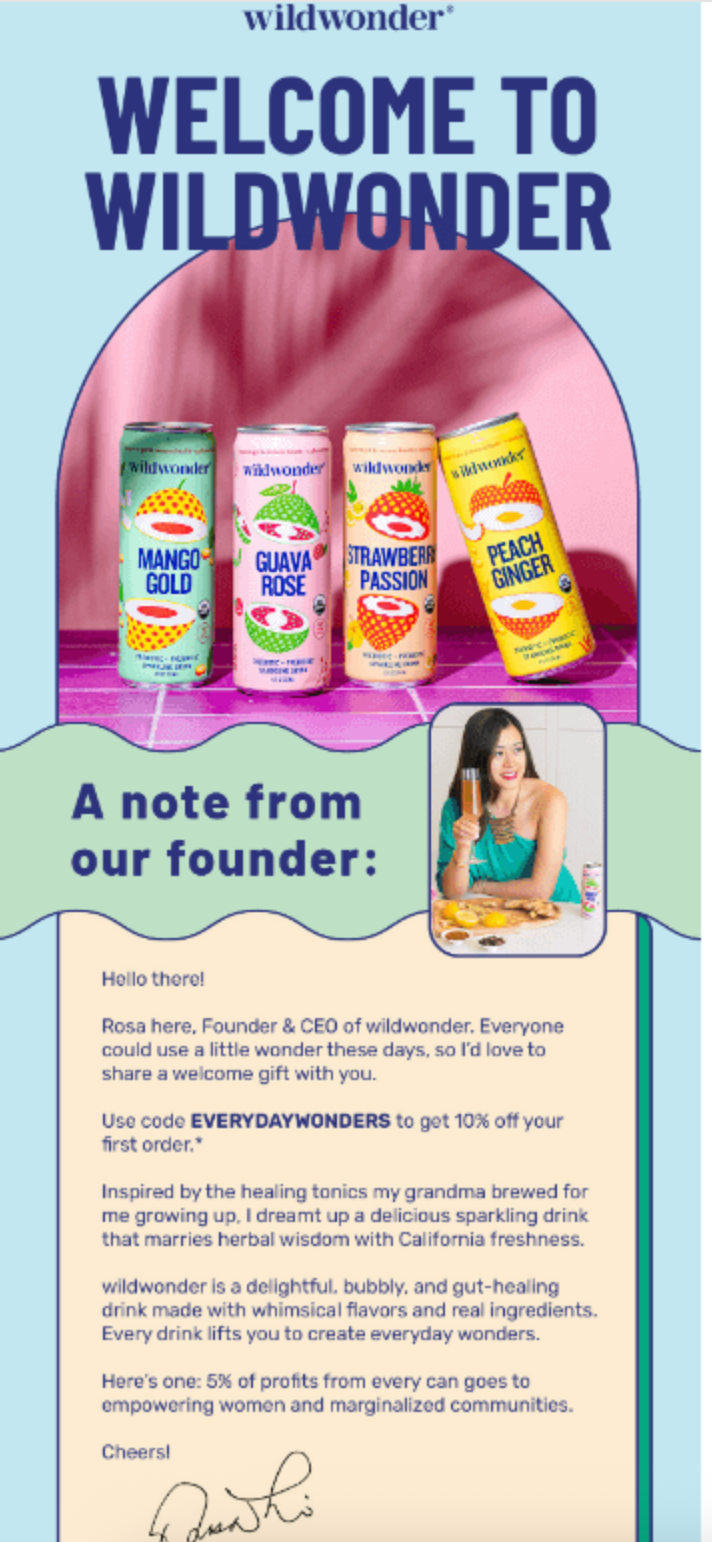
When you see a face and read a story, the brand stops being a logo and starts being people. UGmonk takes a similar approach with a note from founder Jeff Sheldon and even includes an interview-style video about how the brand started.
You don't need a fancy video production team.
A simple, honest message about why you started your business and what you hope to offer can make all the difference.
2. The Warm Welcome That Actually Feels Warm
Lush nails this.
Their welcome email leads with a simple message: "We're glad you're here." That's it. No hard sell. No pressure. Just a genuine acknowledgment that someone chose to connect with them.
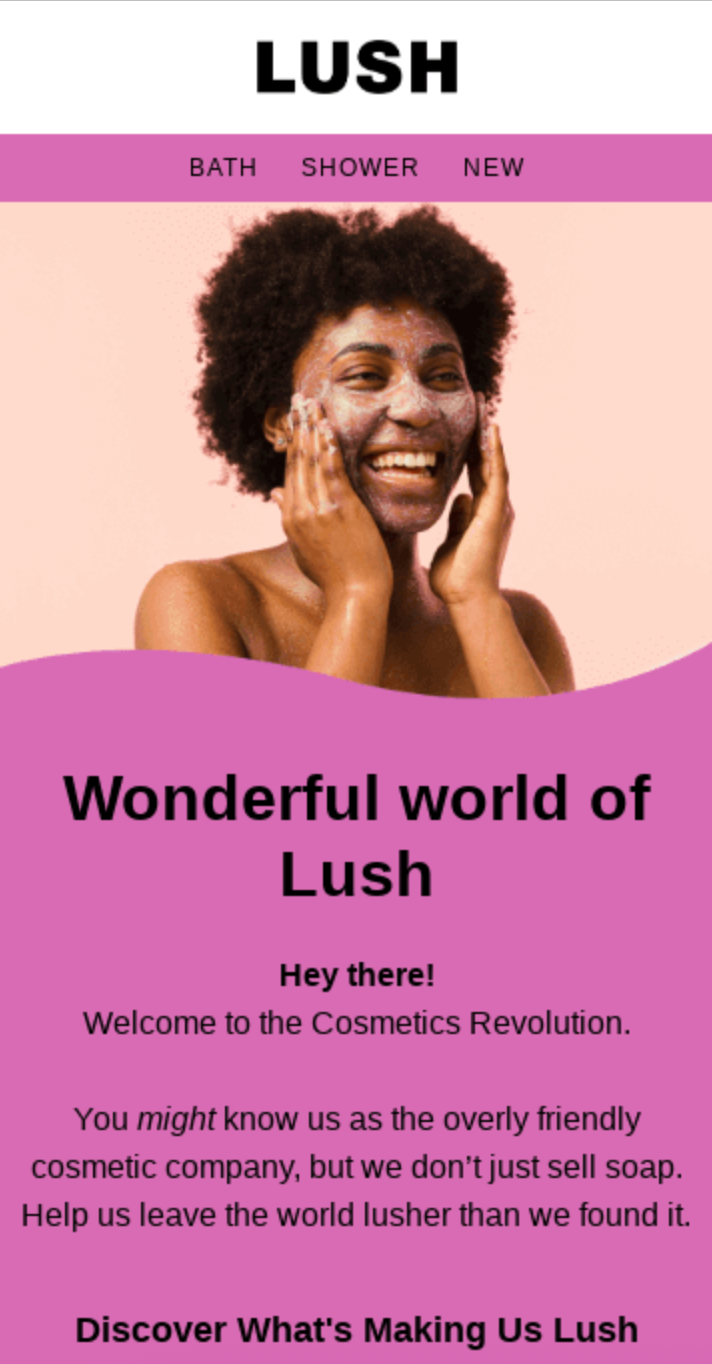
LUSH, the cosmetics company, takes a similar approach by including photos of their founders and talking about their company mission. It feels like being welcomed into someone's home rather than walking into a store.
The key is to make your subscriber feel like they matter. Not like they're just another email address in your database.
3. The Unexpected Delight
Some brands go completely off-script, and it works beautifully.
SAXX Underwear, for example, sends a welcome email with the subject line "Welcome to you and your balls." Yes, really. It's unexpected, it's funny, and it immediately tells you exactly what kind of brand you're dealing with.

Other than that, Huit Denim takes a different unexpected route by sending what looks like a personal letter from the co-founder with a quirky, unconventional tone that makes subscribers feel like they've received something special.
The lesson? Don't be afraid to have a personality. The brands that blend in get ignored. The brands that stand out get remembered.
4. The Story That Pulls You In
Headspace, the meditation app, doesn't start their welcome email with product features or pricing. They start with encouragement. They acknowledge that the subscriber is taking their first steps on a new journey. It's supportive, it's on-brand, and it builds an emotional connection immediately.
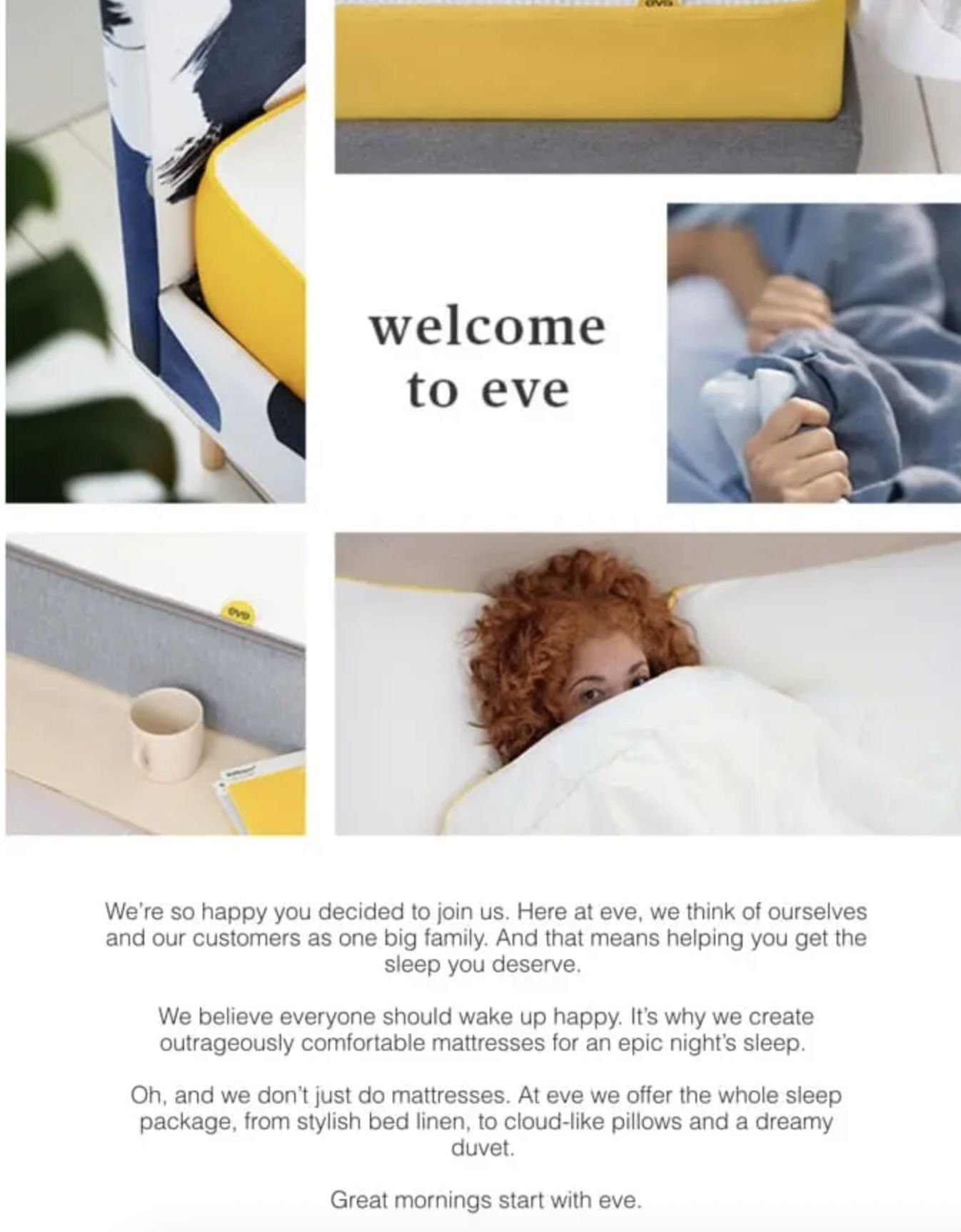
Eve, a mattress company, does something similar. Their welcome email opens with "We believe everyone should wake up happy." That's not selling a mattress. That's selling a feeling. And feelings are what people actually buy.
Glossier tells their brand story in their welcome email too, explaining the inspiration behind their products. People don't just want to know what you sell. They want to know why you exist.
5. The Helpful Guide
Ooni, the pizza oven company, sends welcome emails that don't push for a sale at all. Instead, they link to an ebook with their top 10 recipes. It's value first, selling later. And it works because it builds trust.
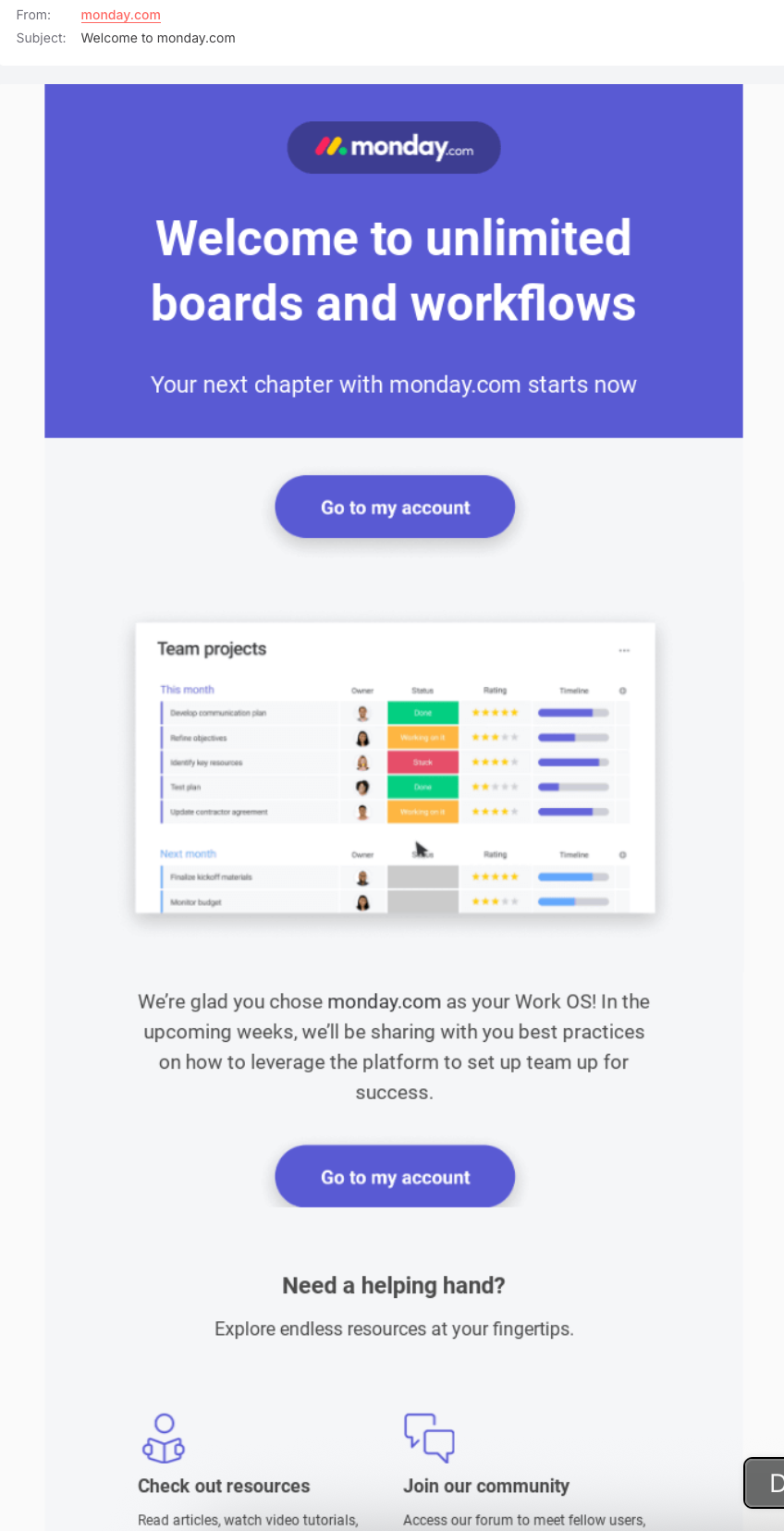
Monday.com, the project management tool, sends a welcome email that makes new users feel like a CEO. The message feels personal and helpful, guiding people through what to do next without being overwhelming.
If you can help your subscribers accomplish something before asking for anything in return, they'll remember that.
6. The VIP Treatment
Velasca, an Italian shoe brand, welcomes new subscribers "to the family" with a discount and a promise from the founders. Skullcandy keeps it short but calls their subscribers family too. These small touches make people feel like insiders, not outsiders.
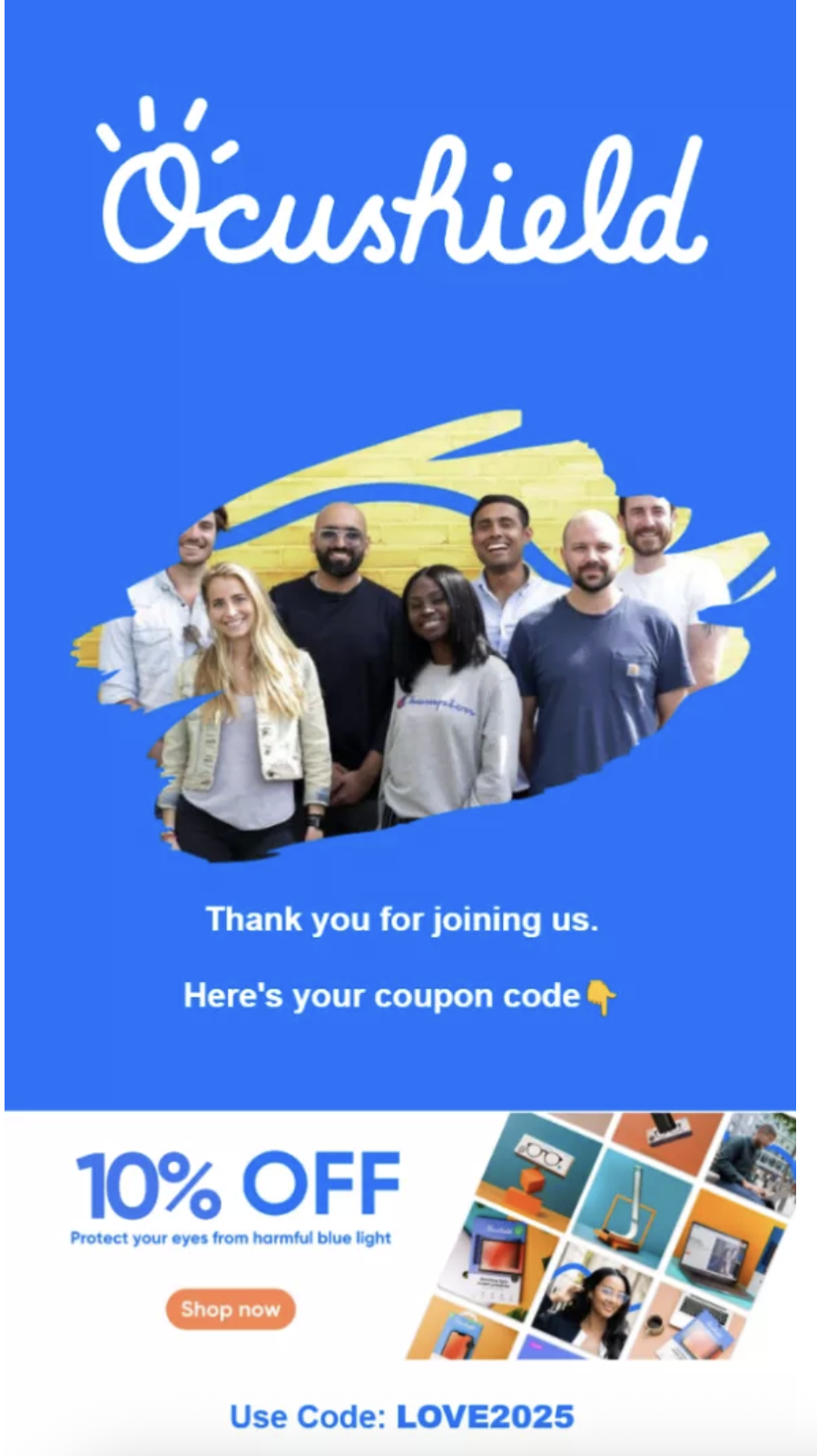
Ocushield, which sells blue-light blocking products, thanks subscribers for joining and immediately offers value through an exclusive discount. But they go further by including social proof: over 3,000 five-star reviews. This makes new subscribers feel confident they made the right choice.
Making people feel special isn't complicated. A warm tone, an exclusive offer, and genuine appreciation go a long way.
7. The Beautiful Design
MOO, the print products company, sends welcome emails that look stunning. Bright colors, fun imagery, and a message that says "if you're not over the moon, we'll move mountains to make it right." The design reinforces what they do: make beautiful things.
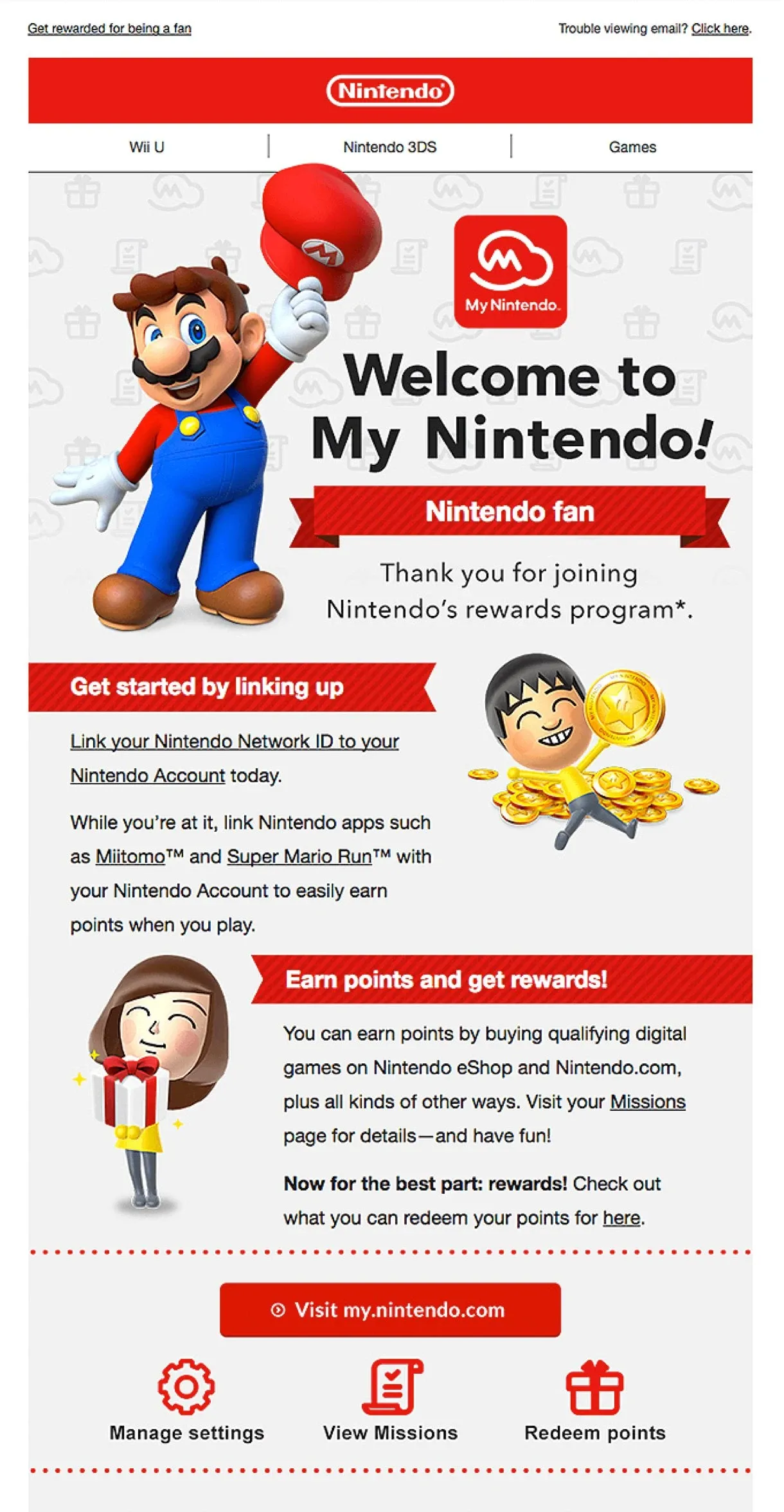
Nintendo uses their iconic characters and colors to make their welcome email instantly recognizable. When you see Mario, you know exactly who sent that email.
Adored Vintage creates emails that look like they came from a Jane Austen novel, with vintage aesthetics that perfectly match their brand. Every element fits the theme.
Your design should match your brand personality. Clean and minimal? Go for that. Bright and playful? Do it. Elegant and sophisticated? Make it happen. Just be consistent.
Essential Elements Every Welcome Email Needs
Now that we've seen what works, let's break down the must-have elements.
A Subject Line That Gets Opened
Your subject line is the first thing people see. Make it count. "Welcome to [Brand Name]" is fine, but "You're in!" or "Welcome to the family" or even "Fantastic. You're in!" feels more exciting. Keep it short, between 20 and 60 characters works best. Some brands use emojis to stand out in crowded inboxes, and the data suggests this can boost open rates when done tastefully.
Personalization That Feels Human
Use your subscriber's name. It sounds basic, but personalized emails get significantly higher open rates, sometimes 50% higher than generic ones. Beyond names, consider referencing how they signed up or what they showed interest in. The more relevant your message, the more likely they are to engage.
A Clear Value Proposition
Tell people what's in it for them. Why should they care? What will they get by being on your list? Reformation, the sustainable clothing brand, communicates their value in just three sentences alongside great product photography. Short, clear, effective.
A Reason to Take Action
Every email needs a next step. Maybe it's a discount code like Alo Yoga's witty offer displayed in a big call-to-action button. Maybe it's exploring your best-selling products. Maybe it's reading a helpful guide. Whatever it is, make it obvious and easy to do.
Social Proof That Builds Trust
New subscribers don't know you yet. Reviews, testimonials, media mentions, or customer counts help them feel confident about their decision to sign up. MFMG Cosmetics includes company logos from publications that have featured them. Wildwonder mentions Forbes, Popsugar, and Buzzfeed. These aren't brags; they're reassurance.
Expectations for What Comes Next
Tell people what to expect from your emails. How often will you write? What kind of content will you send? Setting expectations builds trust and reduces unsubscribes later. Royalty Soaps promises not to spam subscribers, which immediately puts people at ease.
The Timing Factor: When to Send
Send your welcome email immediately. Not tomorrow. Not next week. Right now.
The moment someone signs up is when their interest peaks. Waiting even a day or two means their attention has moved on to something else. They might not even remember signing up. Studies show welcome emails sent within the first two days get higher open rates than those sent later.
This is where email automation becomes essential. Set up your welcome email to trigger automatically the moment someone joins your list. No manual effort required, and every subscriber gets the same great experience.
Beyond the Single Email: Building a Welcome Series
One welcome email is good. A welcome series is better.
Think about it: you wouldn't try to explain your entire life story in one conversation with someone you just met. A series lets you introduce yourself gradually, building a relationship over time instead of dumping everything at once.
Most experts recommend three to four emails in a welcome series. Anything beyond six starts feeling like too much. Here's a simple structure that works:
Email one: The warm welcome. Thank them for joining, tell them what to expect, maybe offer a small discount. No hard sell yet.
Email two: Your story. Share why your brand exists, what you believe in, who's behind it. This is where you build emotional connection.
Email three: Showcase your best. Highlight your most popular products or content. Include customer reviews or testimonials.
Email four: The gentle nudge. If they haven't purchased yet, remind them of any welcome offer. Create some urgency without being pushy.
Space these out over a few days to a week. You want to stay present without overwhelming people.
Common Mistakes to Avoid
Don't make these errors that kill engagement:
Being too salesy too soon. Your first email shouldn't feel like a used car lot. Build trust first, sell later.
Overwhelming with information. Your welcome email isn't the place to explain every product, service, and feature you offer. Keep it focused.
Using a generic tone. "Dear valued customer" makes no one feel valued. Write like a human talking to another human.
Forgetting mobile users. About 41% of email views happen on mobile devices. If your email looks terrible on a phone, you've lost nearly half your audience.
Hiding the unsubscribe link. This doesn't stop people from leaving; it just annoys them and can damage your sender reputation.
Not testing before sending. Send a test email to yourself. Check links. Look at it on different devices. Make sure everything works.
Measuring Success
How do you know if your welcome email is working? Watch these numbers:
Open rate: This tells you if your subject line is doing its job. For welcome emails, aim for at least 50%. The best performers hit 80% or higher.
Click-through rate: Are people engaging with your content? A good welcome email click rate is around 15% to 20%.
Conversion rate: Did subscribers take the action you wanted? Whether that's making a purchase, downloading a resource, or signing up for something else.
Unsubscribe rate: If lots of people leave immediately after your welcome email, something's wrong. Either expectations weren't set properly during signup, or your email missed the mark.
Test different elements. Try different subject lines, change the offer, experiment with the design. Small changes can lead to big improvements.
Final Thoughts
Your welcome email is your first impression, your handshake, your chance to start a relationship on the right foot. Don't waste it on boring, generic, forgettable content.
Be warm. Be human. Be helpful. Show people they made the right choice by signing up, and give them a reason to stick around.
The brands that do this well don't just get customers. They build fans. They create communities. They turn email subscribers into people who actually look forward to hearing from them.
And that all starts with a single, adorable, heart-warming welcome email.
Now go make yours unforgettable.