
Top 10 Newsletter Software to Use in 2026
There are dozens of options out there, each claiming to be the easiest, the fastest, or the most affordable.

Picking the right newsletter software can feel like a full-time job. There are dozens of options out there, each claiming to be the easiest, the fastest, or the most affordable.
Some deliver. Many don't.
To save you the research rabbit hole, we've put together a straight-up list of the best newsletter platforms right now — covering what they do well, where they fall short, and who they're actually built for.
Let's get into it.
1. CampaignLark
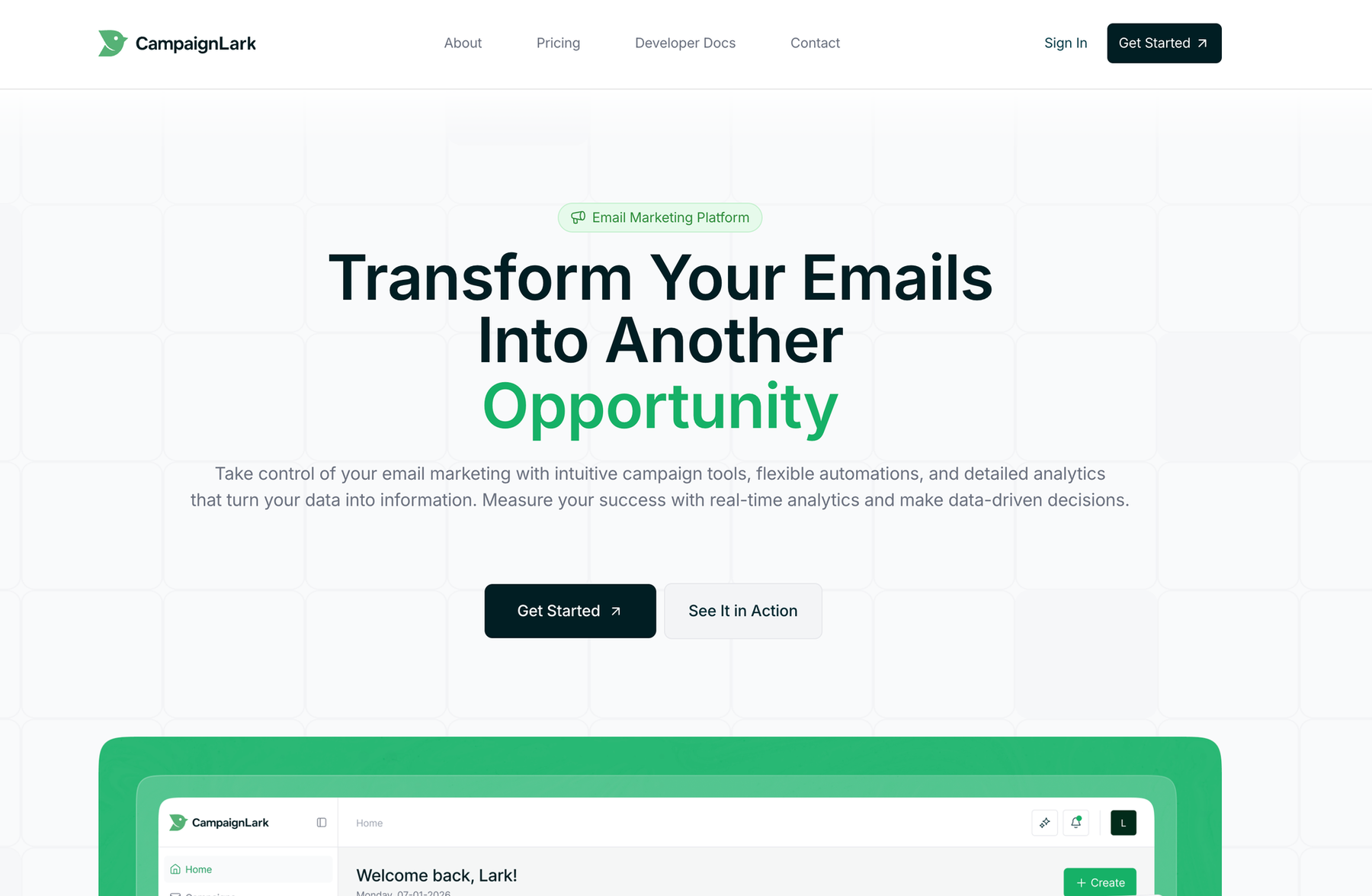
CampaignLark is a modern email marketing platform that makes it genuinely easy to go from idea to send without needing a technical team or a week-long onboarding process. The setup takes under five minutes, the interface is clean, and everything you'd actually need is right there from day one.
What sets CampaignLark apart is the combination of flexibility and simplicity. You get a drag-and-drop email editor, a full template gallery, and the option to bring your own HTML if you want full control. Automations are built around real user behavior—sign-ups, clicks, and inactivity. So your campaigns keep working in the background while you focus on other things.
Key features:
- Smart automations with behavioural triggers and multi-step journeys
- Audience segmentation with dynamic segments and custom fields
- Real-time analytics covering opens, clicks, bounces, conversions, and more
- Isolated workspaces for managing multiple clients or brands under one account
- Unlimited contacts on paid plans (no hidden tier limits)
- A/B testing, embeddable forms, pop-up forms, and custom tracking domains
- 90%+ inbox placement rate and 100M+ emails delivered monthly
Pricing: Free plan available (1,000 emails/month). Paid plans start at $15/month for 5,000 emails. Custom enterprise pricing available for high-volume senders.
The free plan is legitimately useful not a crippled trial. And when you're ready to scale, the pricing stays honest. No per-contact fees creeping up on you as your list grows.
If you're looking for a newsletter platform that respects your time and your budget, CampaignLark is the place to start.
2. Mailchimp
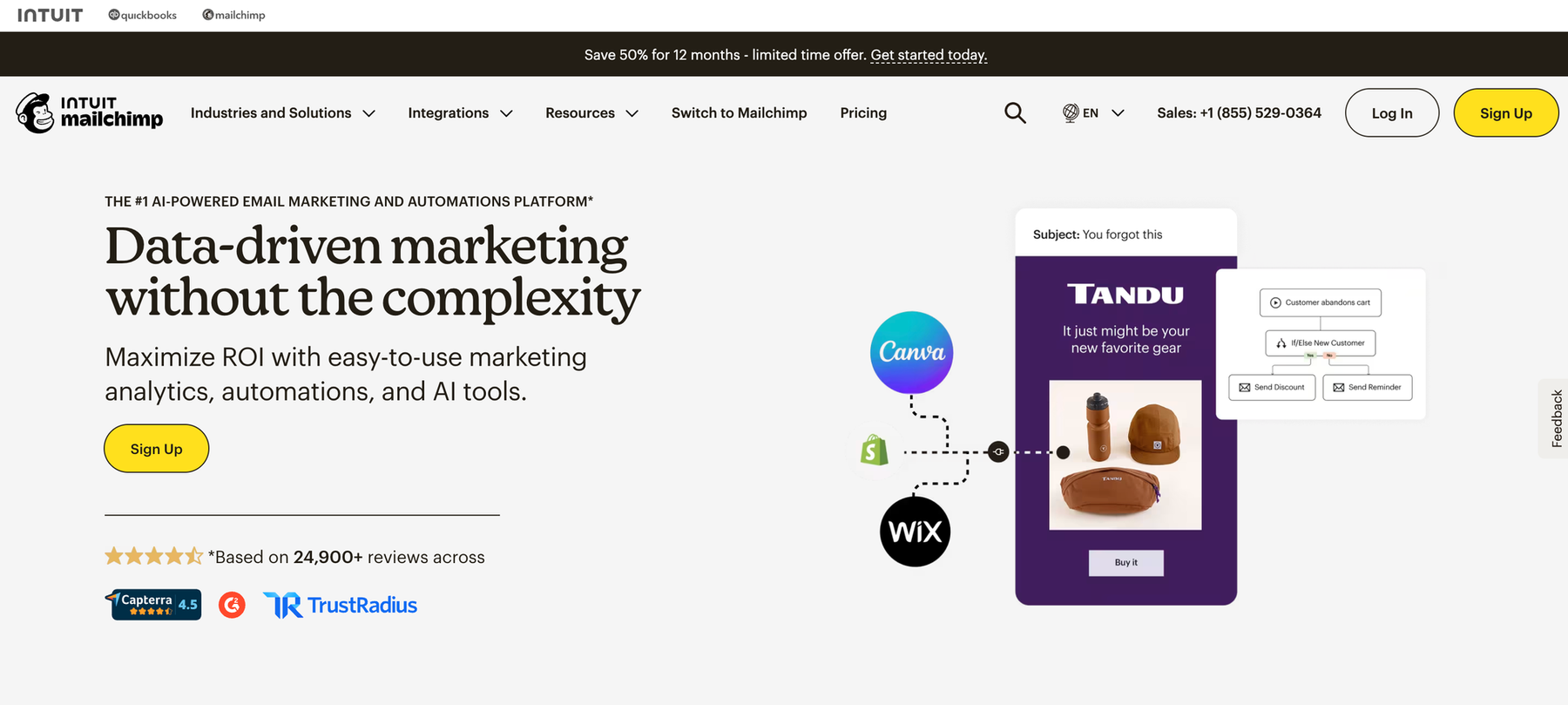
Mailchimp is probably the first name that comes to mind when anyone says "email marketing."
It's been around since 2001, and the brand recognition alone makes it a common starting point for new businesses.
The platform has expanded well beyond newsletters; it now covers landing pages, social ads, CRM-lite features, and more. For total beginners, the drag-and-drop builder and template library lower the learning curve. But Mailchimp's pricing has become a sticking point.
Costs scale steeply as your contact list grows, and some features that were once free have been moved behind paid tiers. It's solid, but you may find yourself paying for a lot you don't use.
Best for: Early-stage businesses or creators just dipping their toes in.
3. ConvertKit (now Kit)
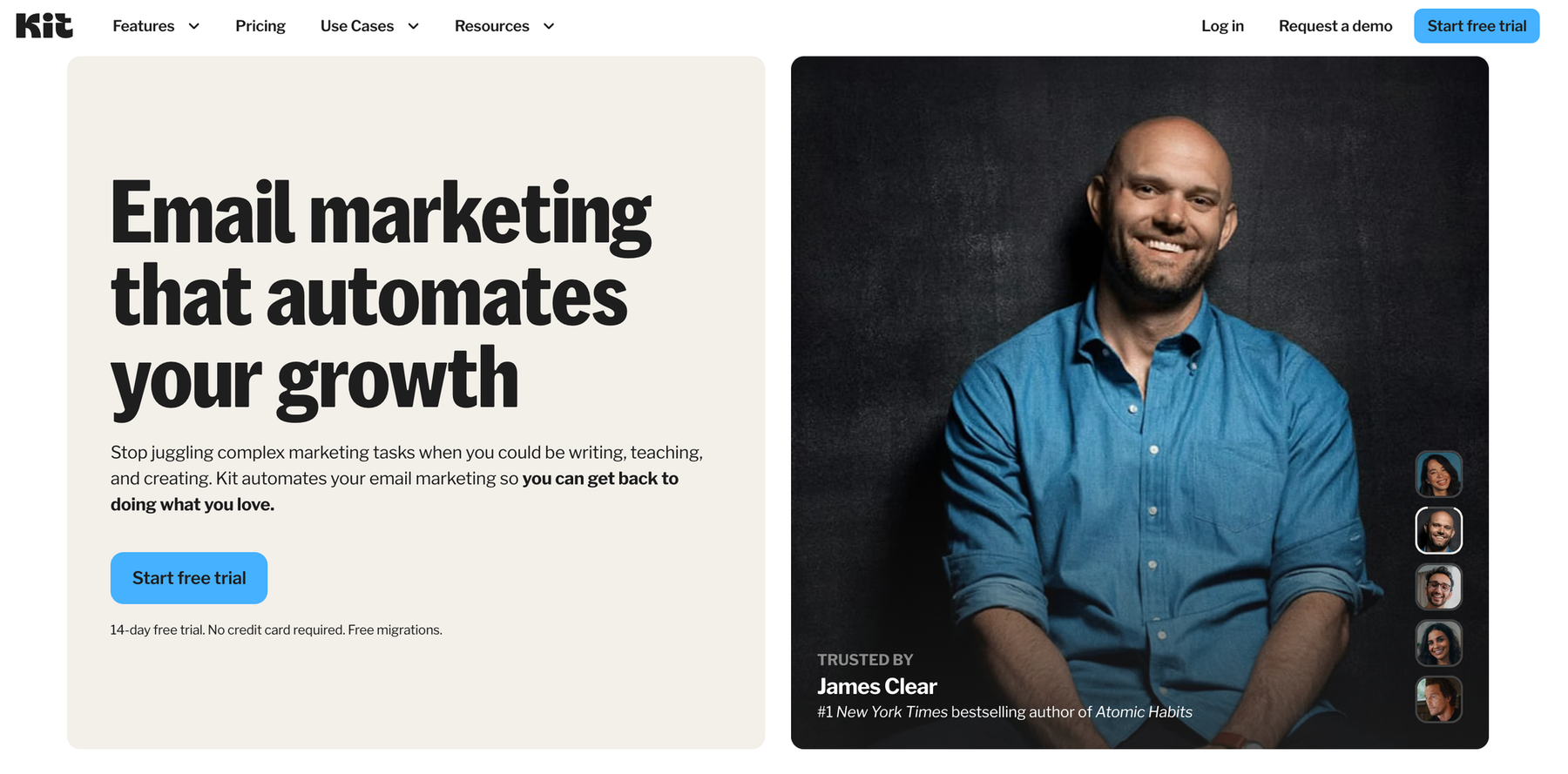
ConvertKit (rebranded as Kit) is purpose-built for individual creators. If you're a blogger, podcaster, YouTuber, or independent writer, the platform's creator-first design will feel familiar fast.
It leans heavily into subscriber tagging and segmentation, which makes it easy to send targeted content based on what your audience has clicked, downloaded, or signed up for. The automation builder is visual and intuitive. Monetisation features like paid newsletters and digital product selling are baked in.
Where Kit falls short is on the design side; the email templates are minimal by default, which some creators love but others find limiting. It's also priced for creators, not companies, so scaling a B2B operation on it can get awkward.
Best for: Content creators and online educators building subscriber-first businesses.
4. Brevo (formerly Sendinblue)
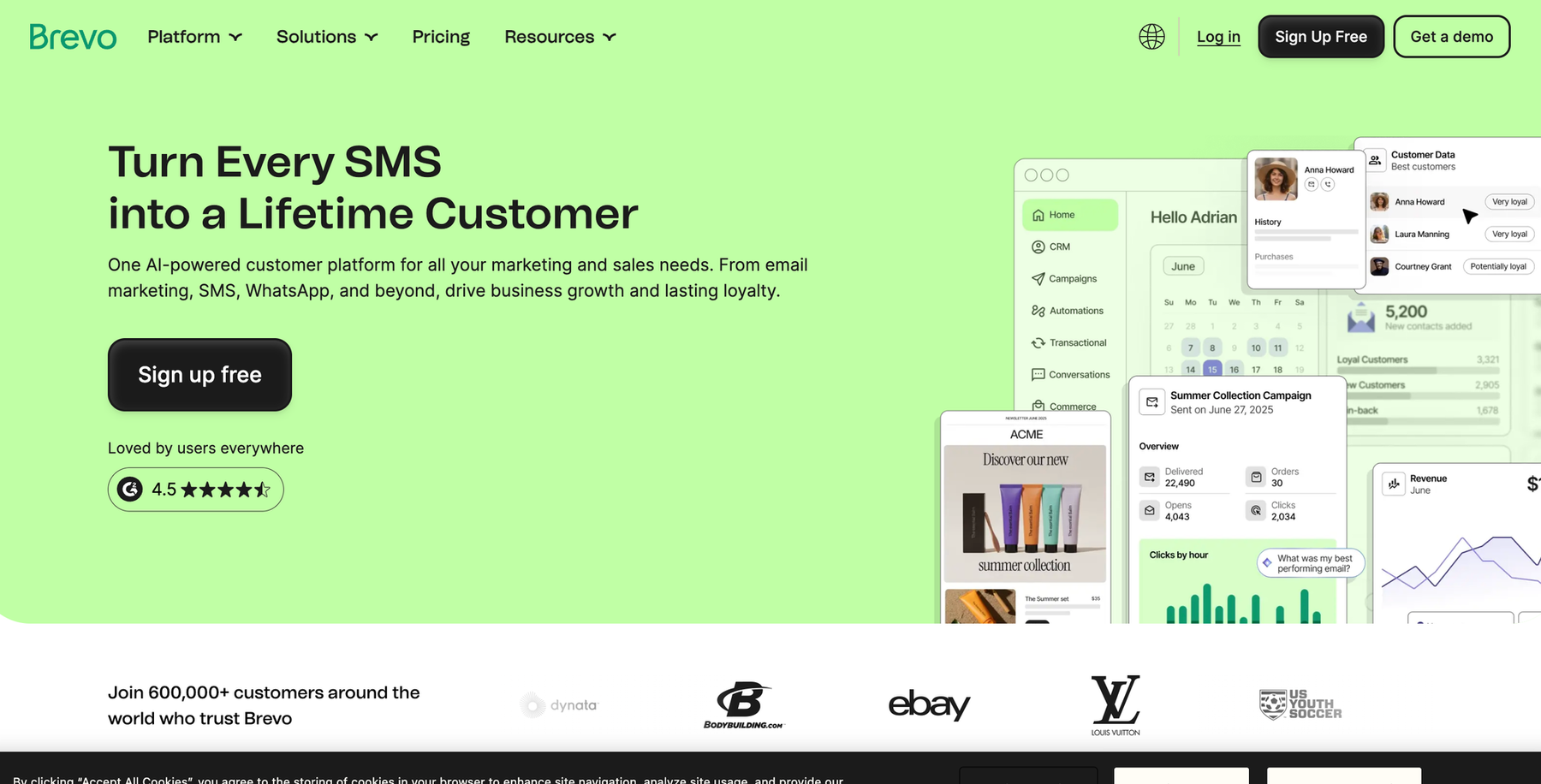
Brevo started as a transactional email platform and has since grown into a full marketing suite. You get email campaigns, SMS messaging, live chat, and a built-in CRM — all from one dashboard.
Pricing is based on emails sent rather than contacts stored, which makes it genuinely cost-effective if you have a large list but don't send every day. The automation tools are solid, and the platform handles both marketing and transactional email well.
The interface has improved over time but can still feel a little busy. Some integrations lag behind competitors. Still, for small businesses that want multi-channel reach without juggling multiple platforms, Brevo delivers.
Best for: SMBs wanting combined email, SMS, and CRM in one place.
5. Beehiiv
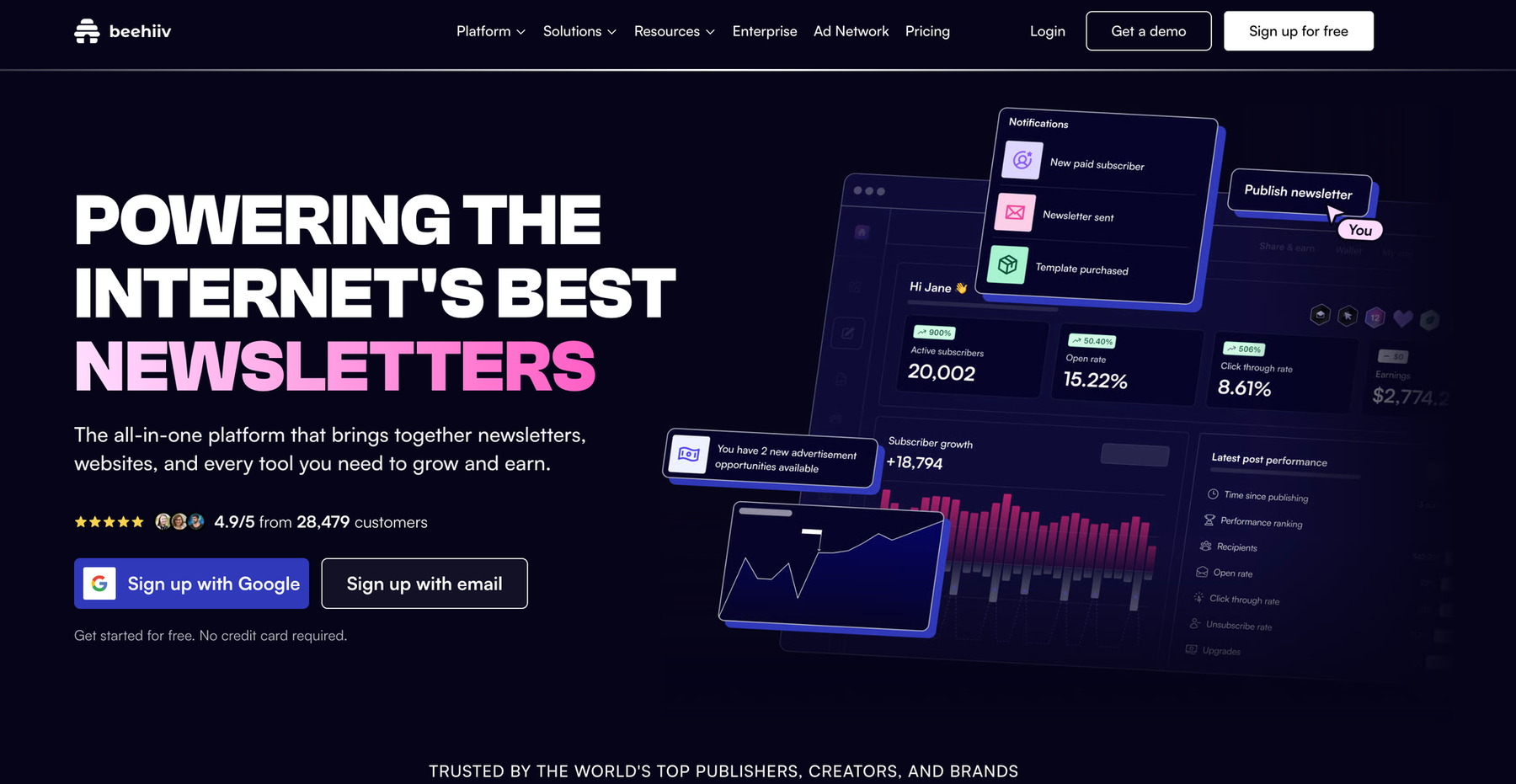
Beehiiv was built specifically for newsletter publishers and it shows. The platform has features you won't find elsewhere, like a referral programme, paid subscription tiers, and a built-in ad network. If your newsletter is the business (not just a marketing channel), Beehiiv is designed around that model.
The editor is clean, the analytics are detailed, and the growth tools are genuinely useful. Subscriber boosts, where you can pay to be recommended in other Beehiiv newsletters, are a unique distribution lever.
The trade-off is that Beehiiv is narrowly focused. If you need e-commerce integrations, CRM syncing, or complex automation sequences, you'll hit walls quickly. It's a specialist tool, not a generalist one.
Best for: Independent newsletter publishers monetising through subscriptions and ads.
6. ActiveCampaign
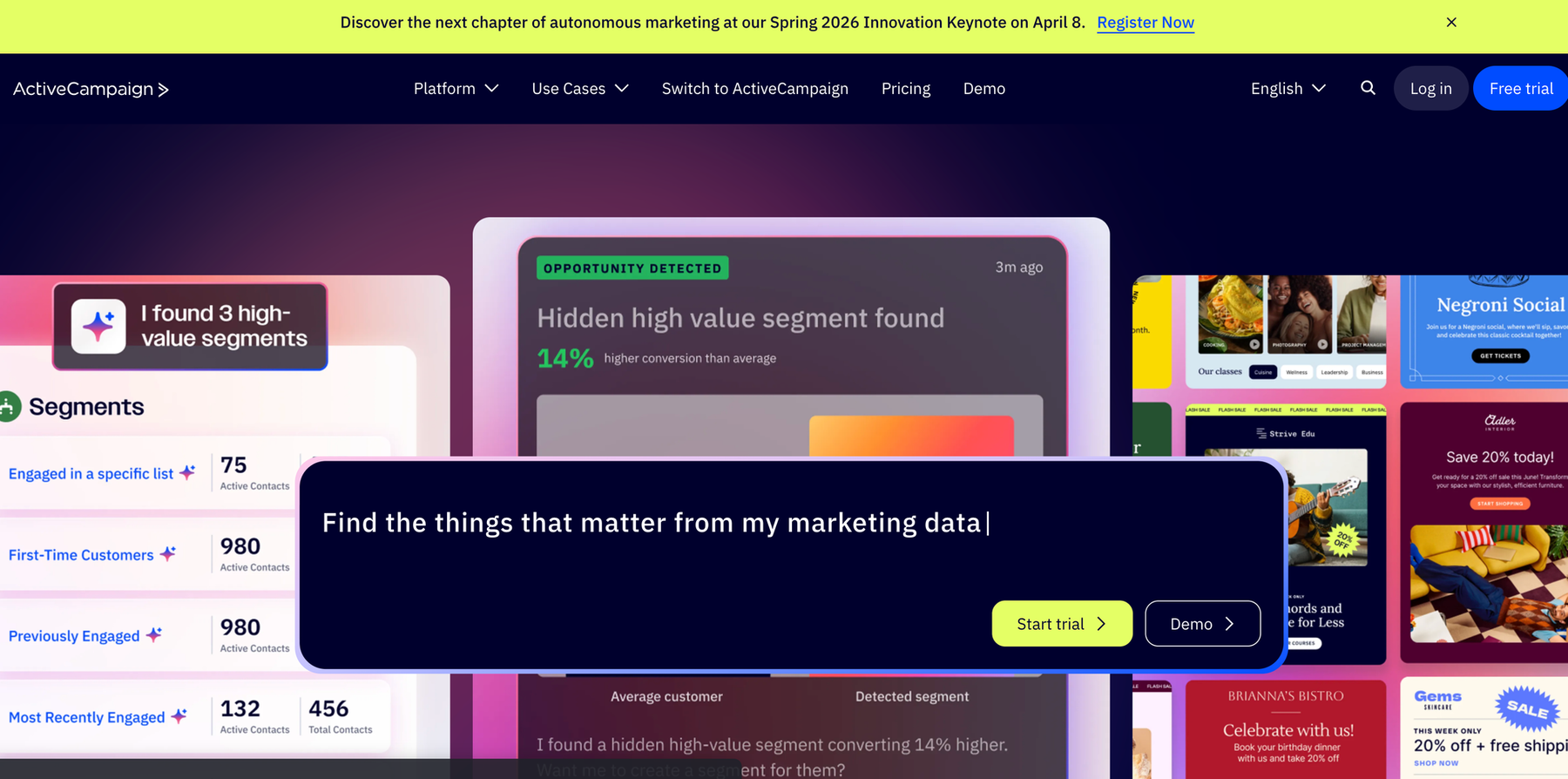
ActiveCampaign is the go-to for businesses that need serious marketing automation. The platform connects email campaigns with a built-in CRM, lead scoring, and sales pipeline management—making it more than a newsletter tool.
Automation is where it truly shines. You can build complex multi-branch workflows based on behaviour, timing, custom fields, and CRM data. The segmentation is powerful. Reporting is detailed.
The flip side: there's a real learning curve, and the pricing reflects the feature depth. For a small team sending straightforward campaigns, it's overkill. But for a growing B2B team that needs email and sales to work together, it's hard to beat.
Best for: Mid-market B2B companies running complex nurture sequences alongside sales.
7. GetResponse
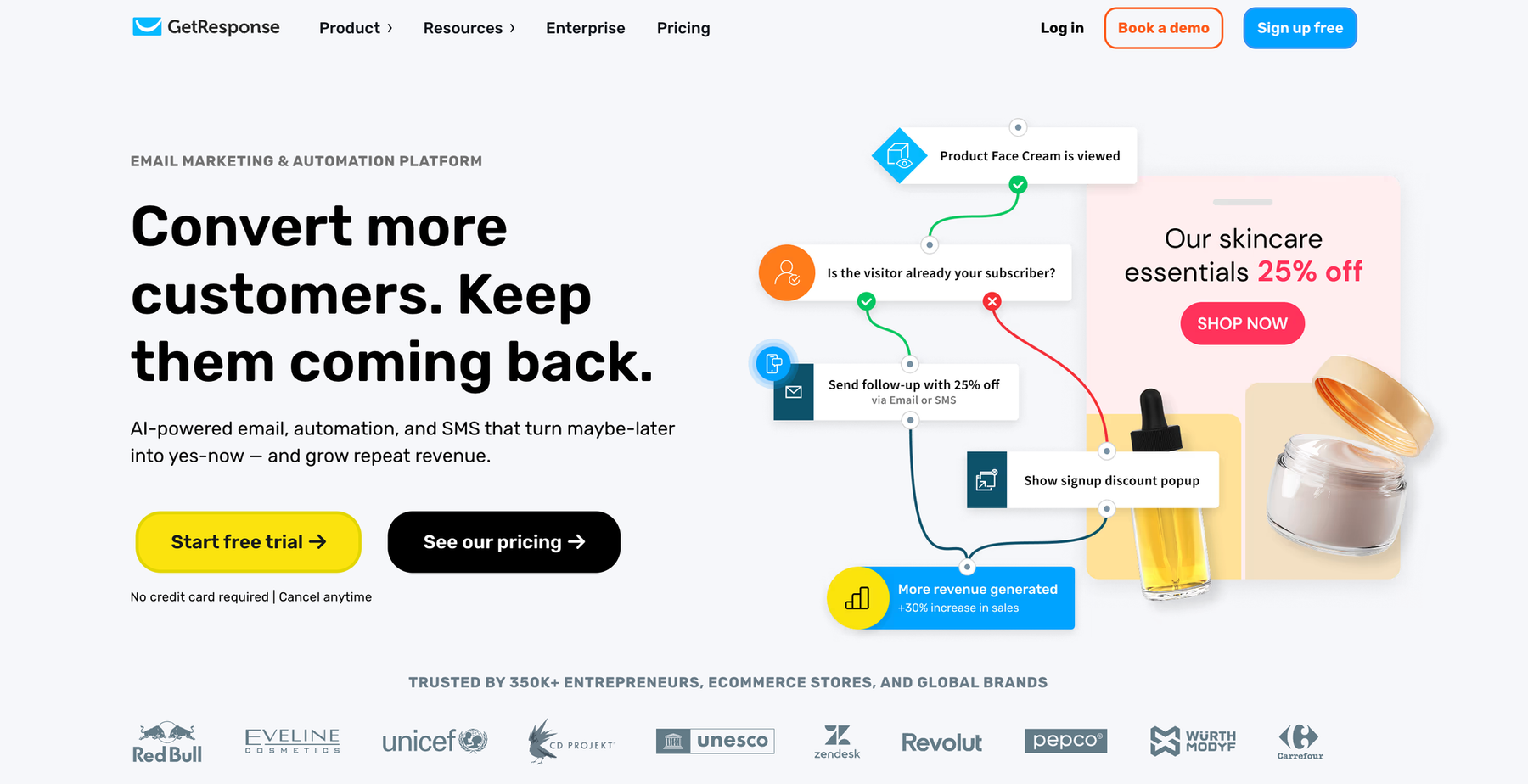
GetResponse packs a surprising amount into one platform — email marketing, landing pages, webinars, automation, and even an AI-powered email generator. It's been around since 1998 and has steadily added features without completely losing simplicity.
The webinar integration is a genuine differentiator. If online events are part of your marketing mix, having that functionality built into the same platform as your email list is genuinely convenient.
Pricing is mid-range and tiered by contact count. The interface is functional but not the most modern. Still, for an all-in-one option that covers more use cases than most, GetResponse earns its spot.
Best for: Online educators and marketers combining email with webinars and landing pages.
8. MailerLite
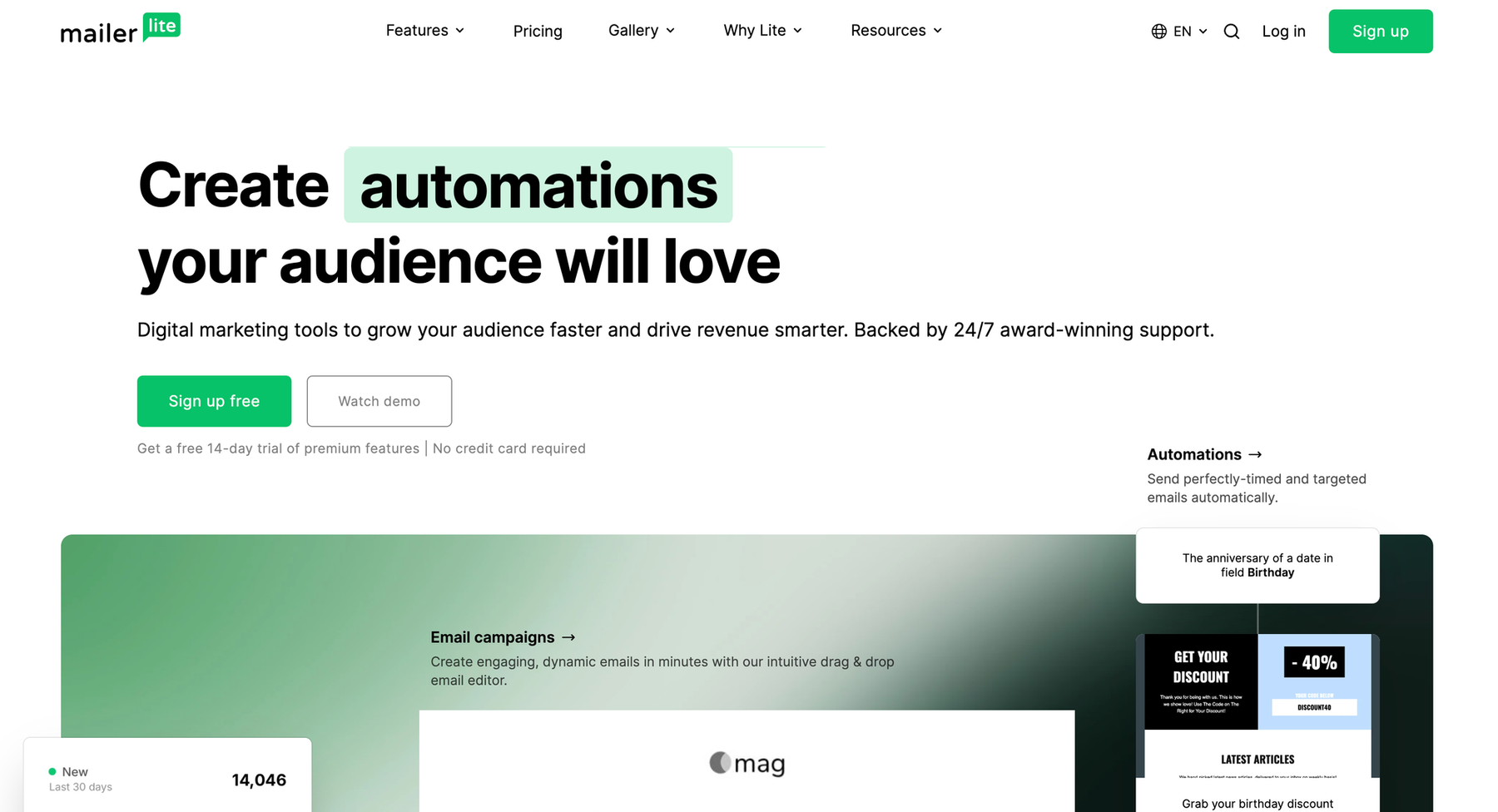
MailerLite is one of the better-looking platforms at its price point. The editor is excellent, the templates are polished, and the interface is straightforward enough that non-designers can produce professional emails without stressing.
Beyond aesthetics, MailerLite covers the basics well — automation, segmentation, A/B testing, landing pages, and forms. The free plan is genuinely generous, and paid plans stay affordable as you grow.
It's not the most feature-rich option, but for businesses that prioritise ease-of-use and clean design over enterprise-grade complexity, MailerLite is a strong pick.
Best for: Small businesses and freelancers wanting polished emails on a tight budget.
9. Constant Contact
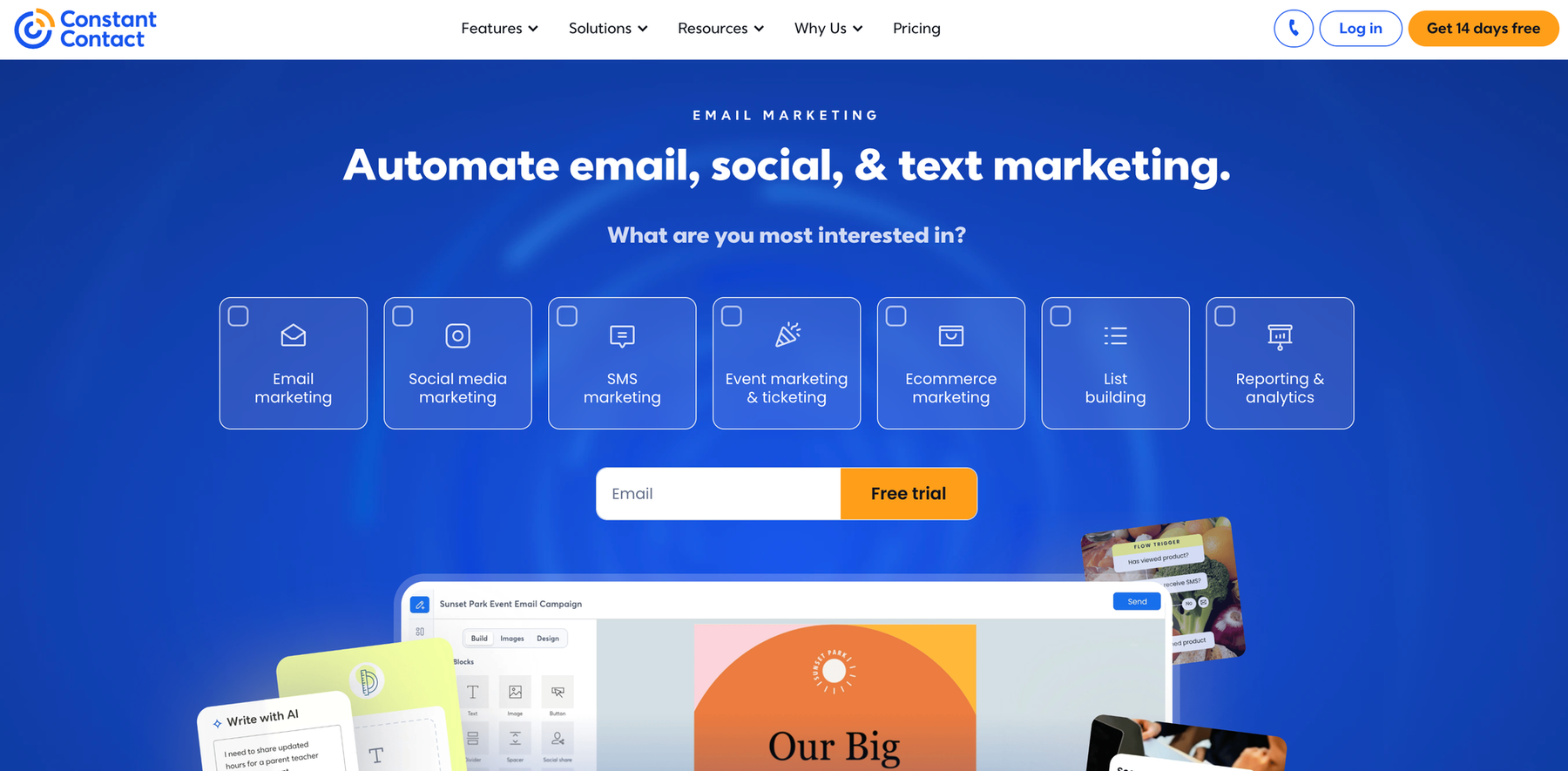
Constant Contact has been in the email marketing game for a long time, and its reputation is built on reliability and support. It's one of the few platforms that offers live phone support, which matters to users who aren't comfortable troubleshooting on their own.
The platform covers email, SMS, event management, and social media posting. Templates are plentiful. The event registration tools are a standout feature for organisations that run regular in-person or online events.
Where Constant Contact lags is on automation depth and pricing value compared to newer platforms. It's not built for marketers who want to push boundaries — it's built for those who want reliable basics and good support.
Best for: Non-profits, brick-and-mortar businesses, and organisations with frequent events.
10. Substack
Substack sits at the intersection of newsletter platform and publishing platform. Writers sign up, hit publish, and Substack handles subscriptions, payments, and distribution. There's no monthly fee.
However, substack takes a 10% cut of paid subscription revenue instead.
For writers who want to build a readership and monetise directly through subscriptions, Substack removes most of the setup friction. The built-in discovery features help new writers get found.
The limitations are significant for anyone with marketing goals beyond publishing. Automation is basically non-existent. Segmentation is limited. Integrations are minimal. You're not really "marketing" on Substack — you're publishing. If that's all you need, it works brilliantly.
Best for: Independent writers monetising through paid subscriptions.
Quick Comparison
| Platform | Best For | Free Plan | Starting Price |
|---|---|---|---|
| CampaignLark | Businesses of all sizes | Yes (1,000 emails/mo) | $15/month |
| Mailchimp | Beginners | Yes (limited) | ~$13/month |
| Kit (ConvertKit) | Creators | Yes | $25/month |
| Brevo | Multi-channel SMBs | Yes | ~$9/month |
| Beehiiv | Newsletter publishers | Yes | $39/month |
| ActiveCampaign | B2B automation | No | ~$15/month |
| GetResponse | All-in-one marketing | No | ~$19/month |
| MailerLite | Design-first SMBs | Yes | $9/month |
| Constant Contact | Local/event businesses | No | ~$12/month |
| Substack | Independent writers | Yes (revenue share) | Free + 10% |
Takeaways
The right newsletter software depends entirely on what you're building and how fast you need to move. If you're a solo writer, Substack or Kit might be perfect. If you're running a growing business and need real automation, segmentation, and analytics without paying enterprise prices, CampaignLark is worth a serious look.
The free plan is a genuine starting point (not a locked-down teaser), and the paid tiers scale in a way that makes sense as your audience grows. Setup takes minutes. The features are there when you need them.
And the deliverability numbers back it up.